
By Jen Murphy
Photography by Murray Hall
The crescent moon glows faintly in the inky sky, and Aspen’s Silver Queen is still. The mighty gondola won’t start spinning to the top of Ajax for another three hours, yet half a dozen skiers and snowboarders—myself included—are already suiting up at the mountain’s base. Come 9 o’clock, when the Silver Queen roars to life, our crew will already be sipping lattes at The Little Nell, our first tracks still carved into the slopes.
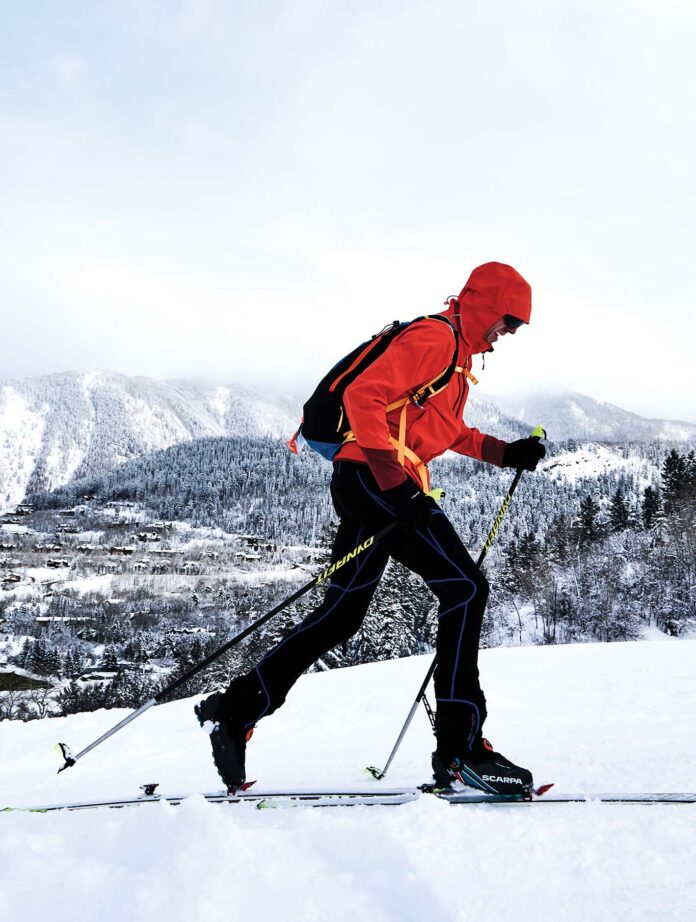
We are a unique tribe, part powderhound, part type-two fun seeker who loves a physical challenge. We rise well before dawn in the nose-tingling cold to ascend epic slopes on skis (or, in my case, a splitboard, which is a snowboard sliced into a pair of mountain-touring skis). Once we’ve reached the top, we schuss back down, surrounded by a quiet stillness that can only be found in pre-opening hours. It’s a thrilling reward worth every stride.
Like many of my uphill cohorts, I received my first introduction to the sport known as skinning in Aspen. Long a winter pastime in Europe, it has only recently caught on in the U.S., and Aspen Snowmass was an early adopter.
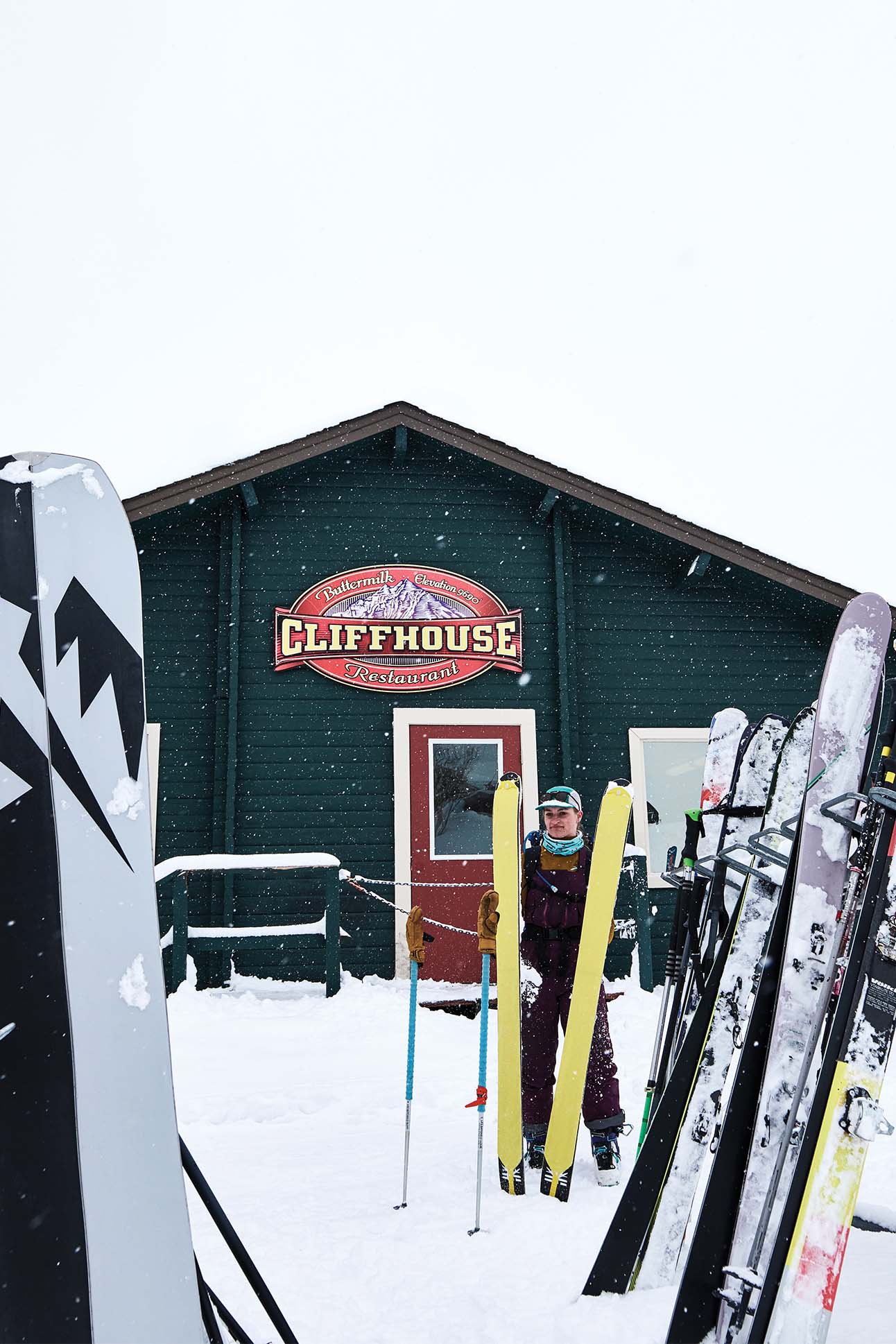
My first ascent came five years ago, when a local friend invited me on what she deemed a “mellow” climb to the top of Buttermilk. I was tempted—especially when she told me about the buttery French toast and crispy bacon that would be greeting me at the summit, a winter tradition held every Friday morning at Cliffhouse Restaurant.
That Friday, long before sunrise, I met her group at the base of Buttermilk, and as I attached sticky adhesives, or skins, to the bottom of my skis—a means of preventing me from slipping downhill—the crew gave me advice for my first climb.
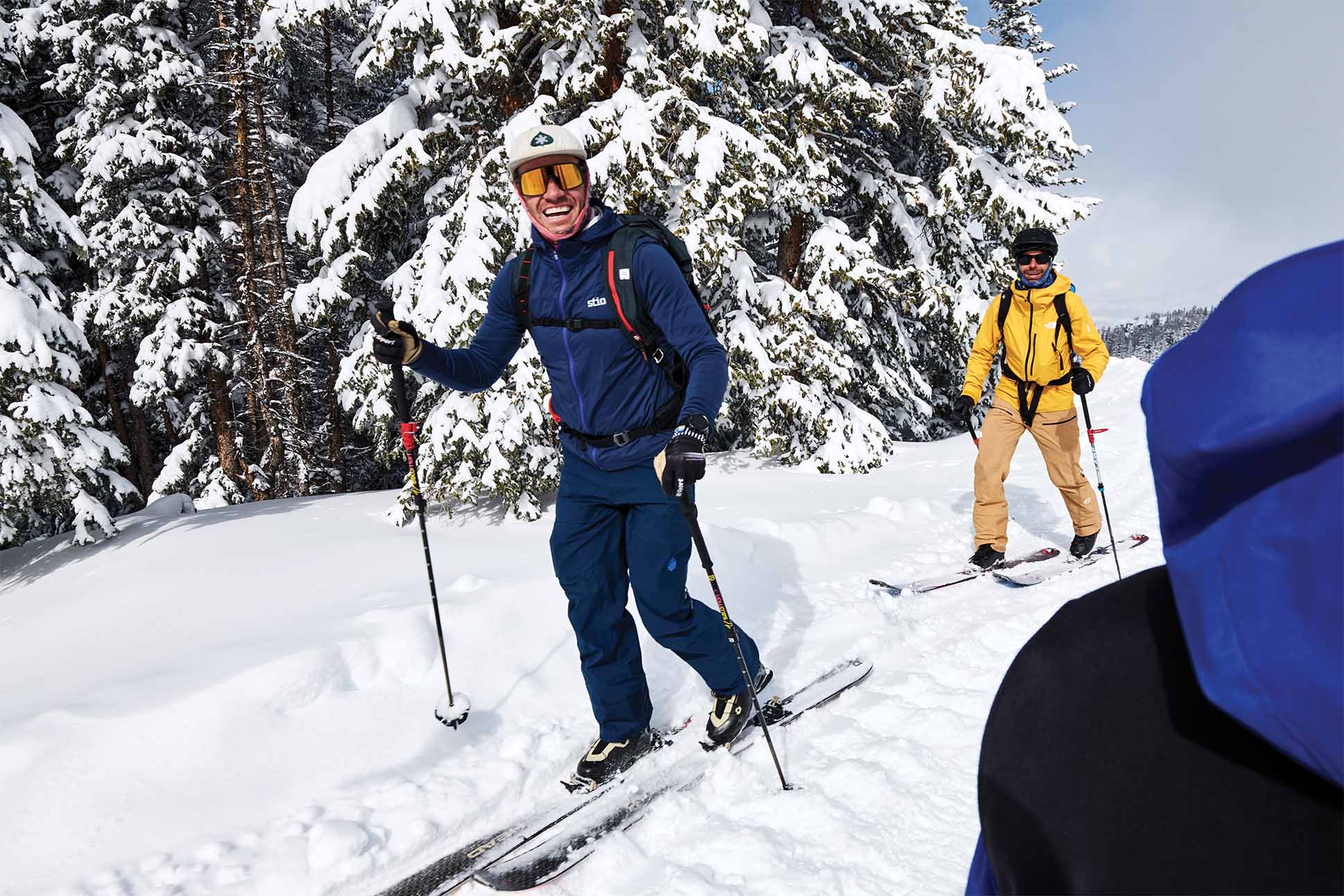
“Don’t lift your skis off the ground,” I was instructed. “You’ll waste energy. The motion is a glide, not a march.” The temperature was barely 40 degrees, yet my friend was stuffing her puffer and gloves into her pack. “Trust me, you want to start cold,” she said with a smile, before taking off with the rest of our group. I clicked my boots into their bindings—both specially designed to free my heels for climbing—and chased after them.
Within 15 minutes they were out of view, and I was thankful I no longer had to attempt to make small talk. My lungs burned. My heart rate soared. My base layer was soaked with sweat. And I wasn’t even halfway to Cliffhouse. Bacon seemed a million miles away.
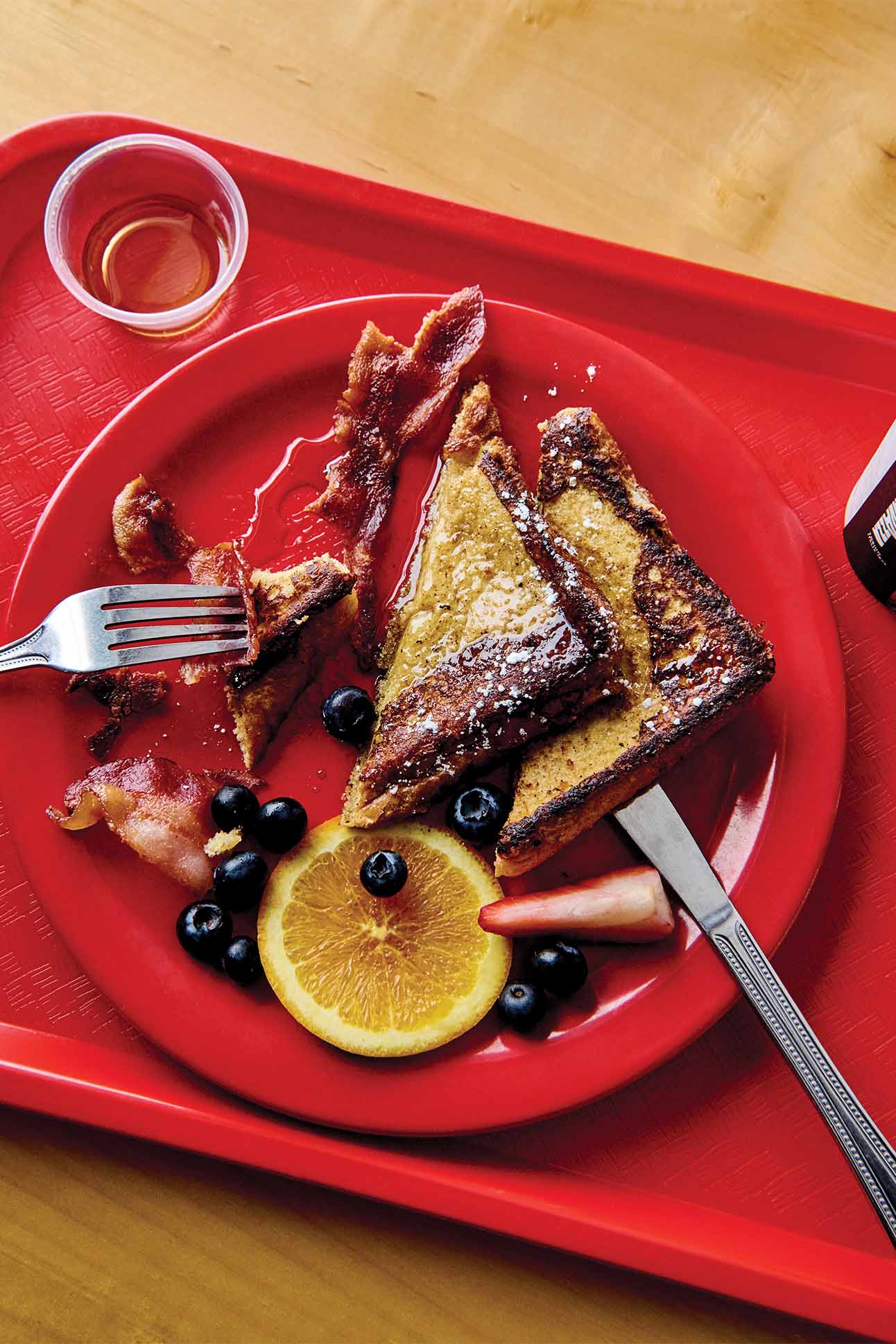
I learned on that first humbling day that skinning is a serious aerobic workout: I made it to the restaurant just before breakfast concluded at 10 a.m. The group had waited for me—though their food was long gone—and as I hungrily shoveled forkfuls of French toast into my mouth, they took turns recounting their own first uphill grinds. By the time I downed my last maple-syrup-soaked bite, I understood their addiction. Yes, there is something undeniably satisfying about doing something hard, but what had me already dreaming of my next uphill was the camaraderie around our shared effort.
That winter, I vowed to get speedier, and Aspen Snowmass offered plenty of opportunities for practice: All four mountains allow uphill travel and have designated routes for uphillers to follow. You can skin all day long, from 5 a.m. until 10:30 p.m., with the exception of Aspen Mountain, where skinning isn’t permitted during operating hours (between 9 a.m. and 4:45 p.m.).
I started by conquering West Buttermilk, the most forgiving of the three routes to the top of Buttermilk. By my third attempt, the slog felt more like a meditative journey. I fell in tune with my breath and the rhythm of putting one foot in front of the other.
Next, I tackled the climb to Sam’s. The Italian restaurant just off Snowmass’s Village Express Lift keeps a leaderboard of speedy uphillers. I never made the list. Thankfully, it wasn’t a prerequisite for ordering the artisanal cheese and charcuterie.
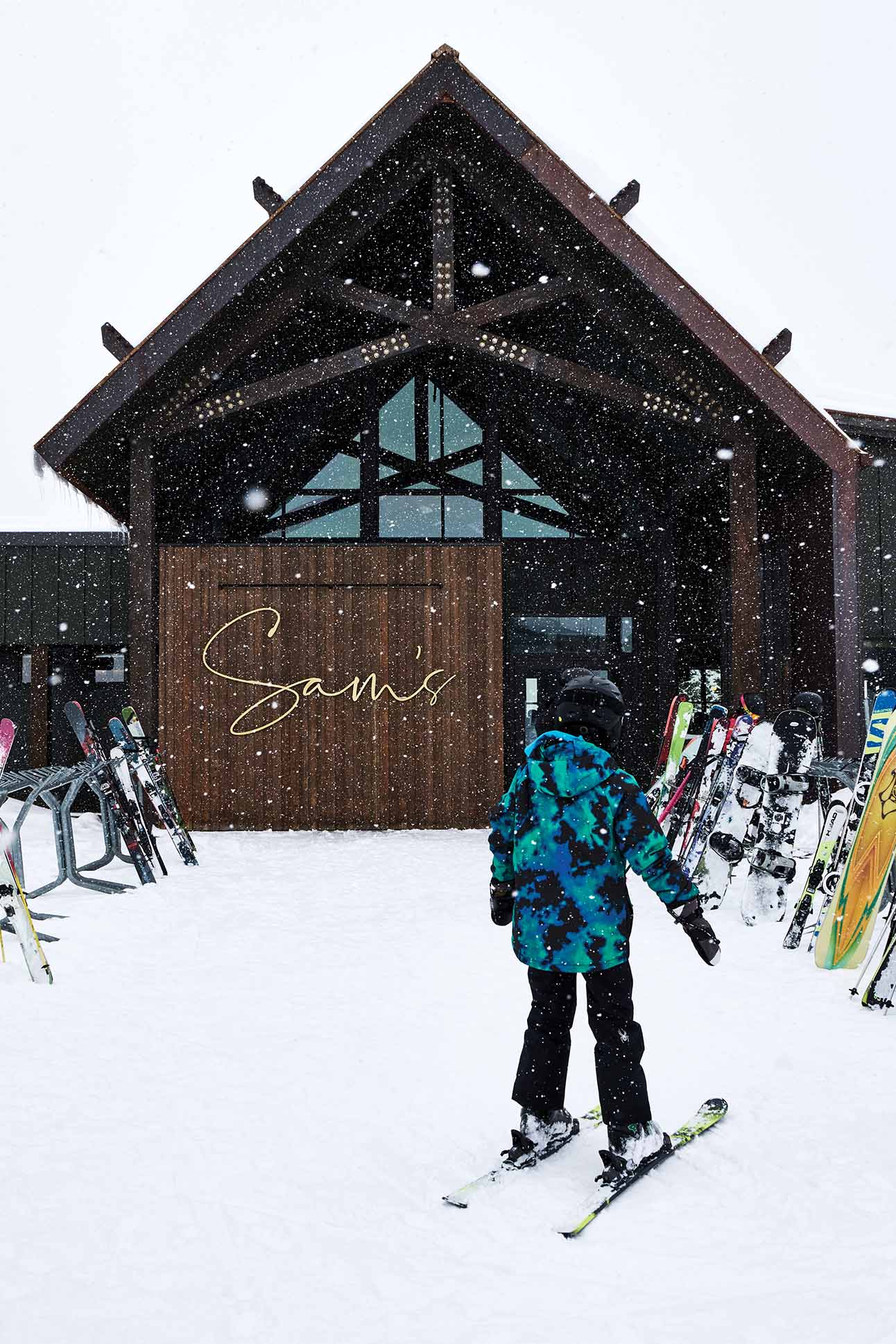
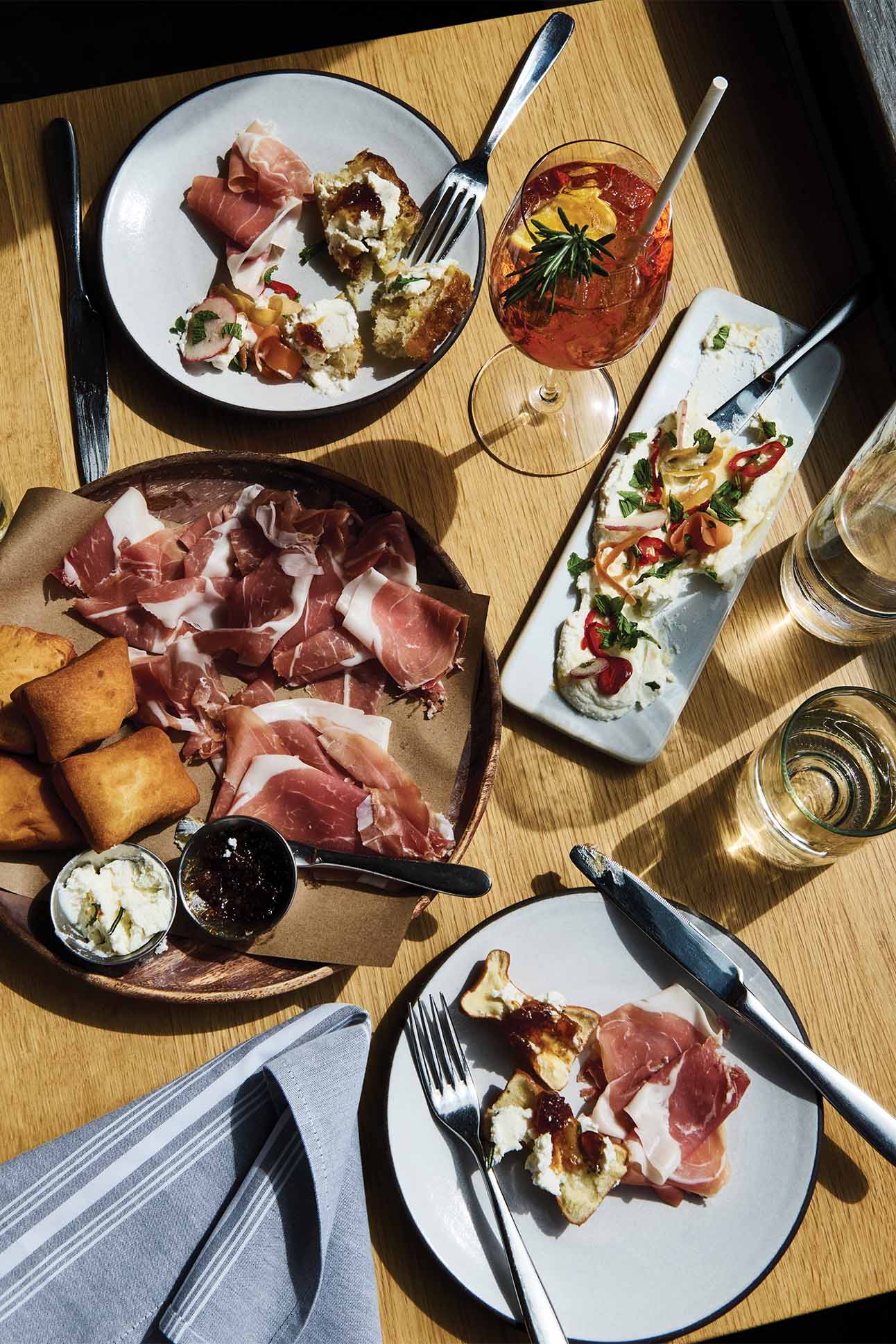
By the time I became efficient enough to climb 2,440 feet, around midway up Aspen Mountain, I regularly spotted familiar faces and felt like a bona fide member of the close-knit uphill community. At the top of that climb, I was greeted with legendary, plate-sized oatmeal pancakes served at Bonnie’s—an uphiller’s institution.
“Skinning up to Bonnie’s for their famous breakfast pancakes is one of my favorite traditions,” says local artist and skinning enthusiast Amy Beidleman. “To me, it’s a classic Aspen experience that combines community, tradition, and the joy of being in the mountains.” Bonnie’s owner Brigitte Birrfelder even stores personal jugs of maple syrup behind the counter for her regulars.
Jessie Young, a member of the U.S. Ski Mountaineering team, celebrates her birthday each December with a Bonnie’s breakfast outing. “An early morning skin up Aspen is my favorite winter activity, whether training for a big race or skinning with friends,” she says. “You can often recognize the usual suspects by their outfits—the woman who always wears neon pink and the older guy who is shirtless under his bibs. It’s fun to see more new people going uphill too.”
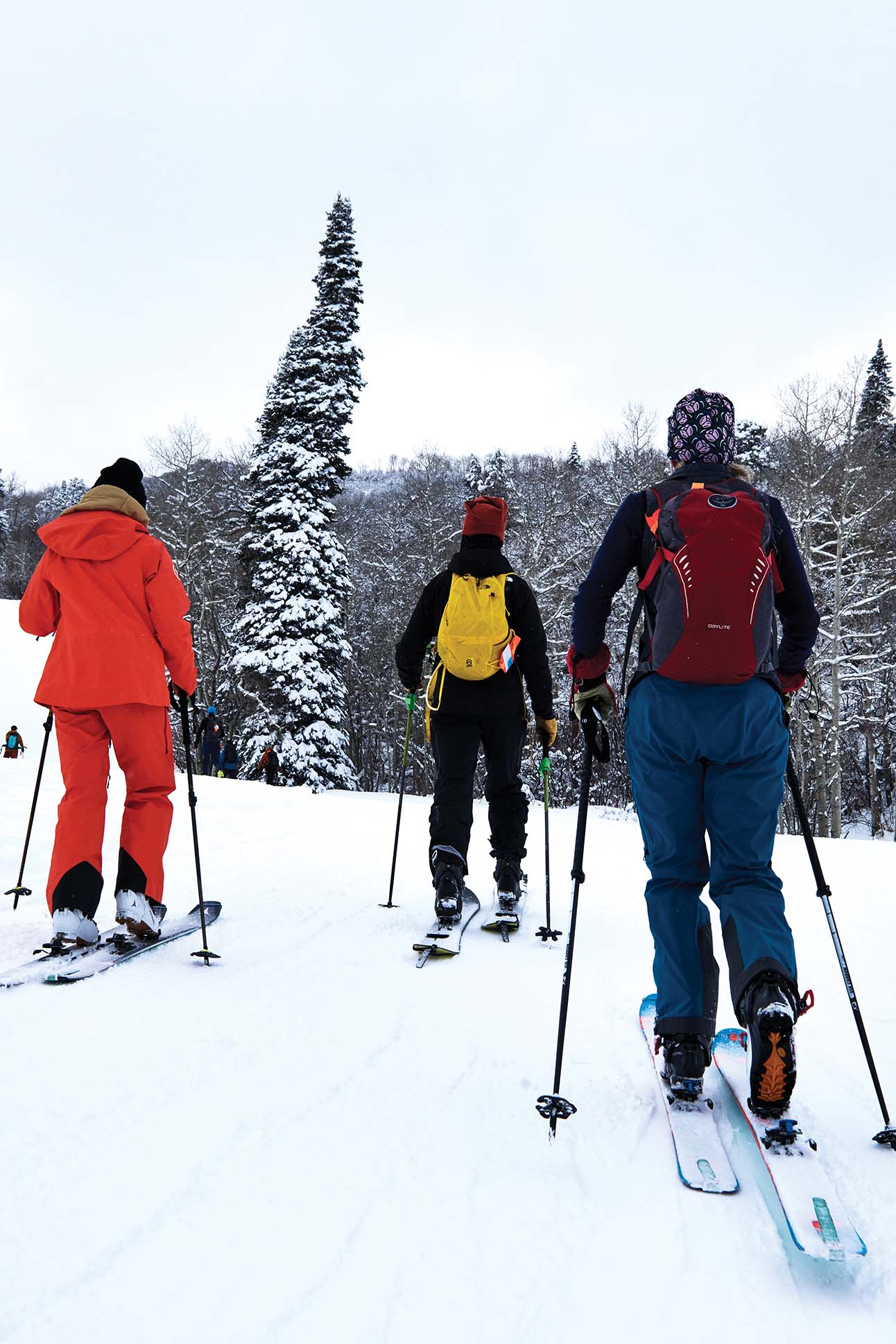
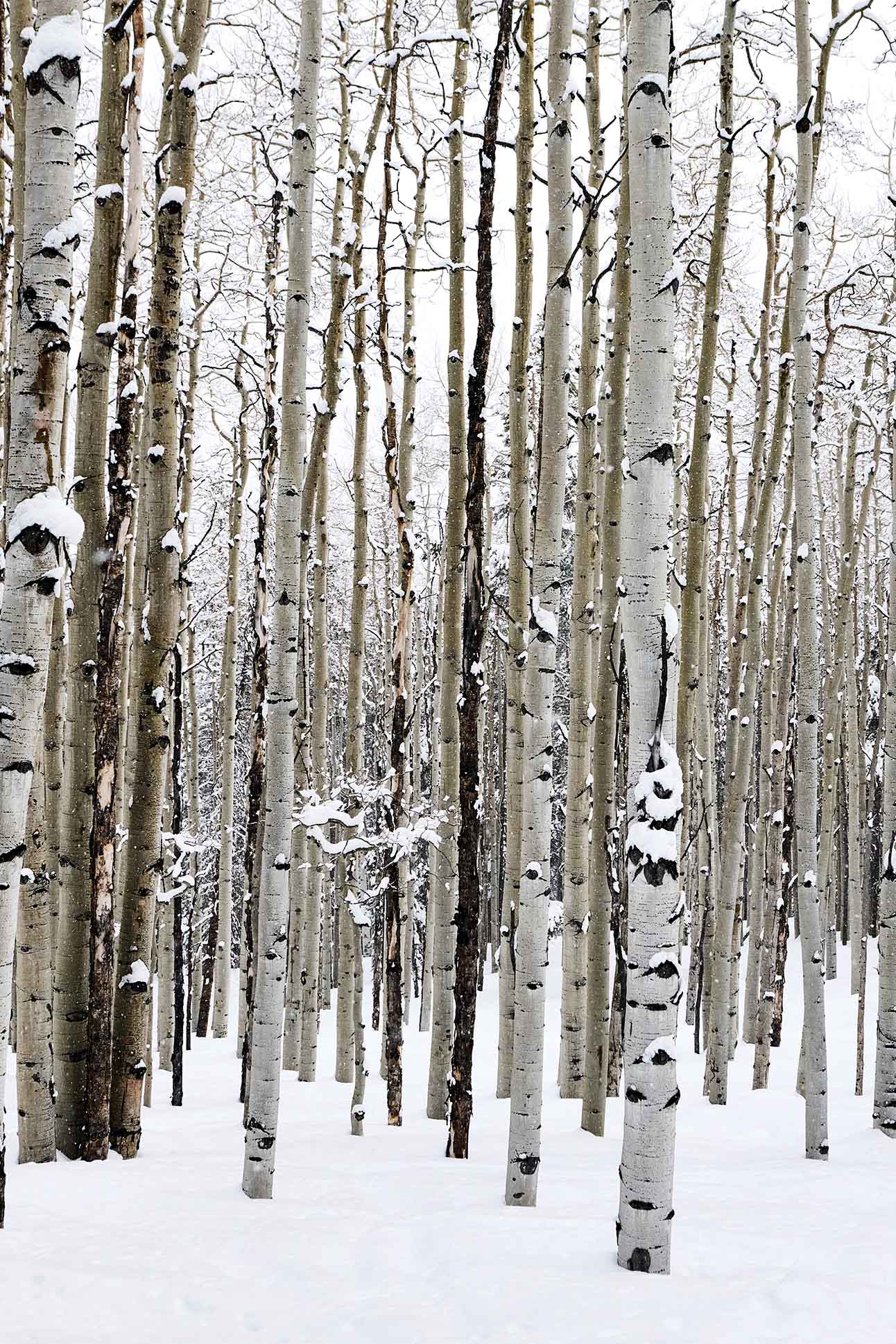
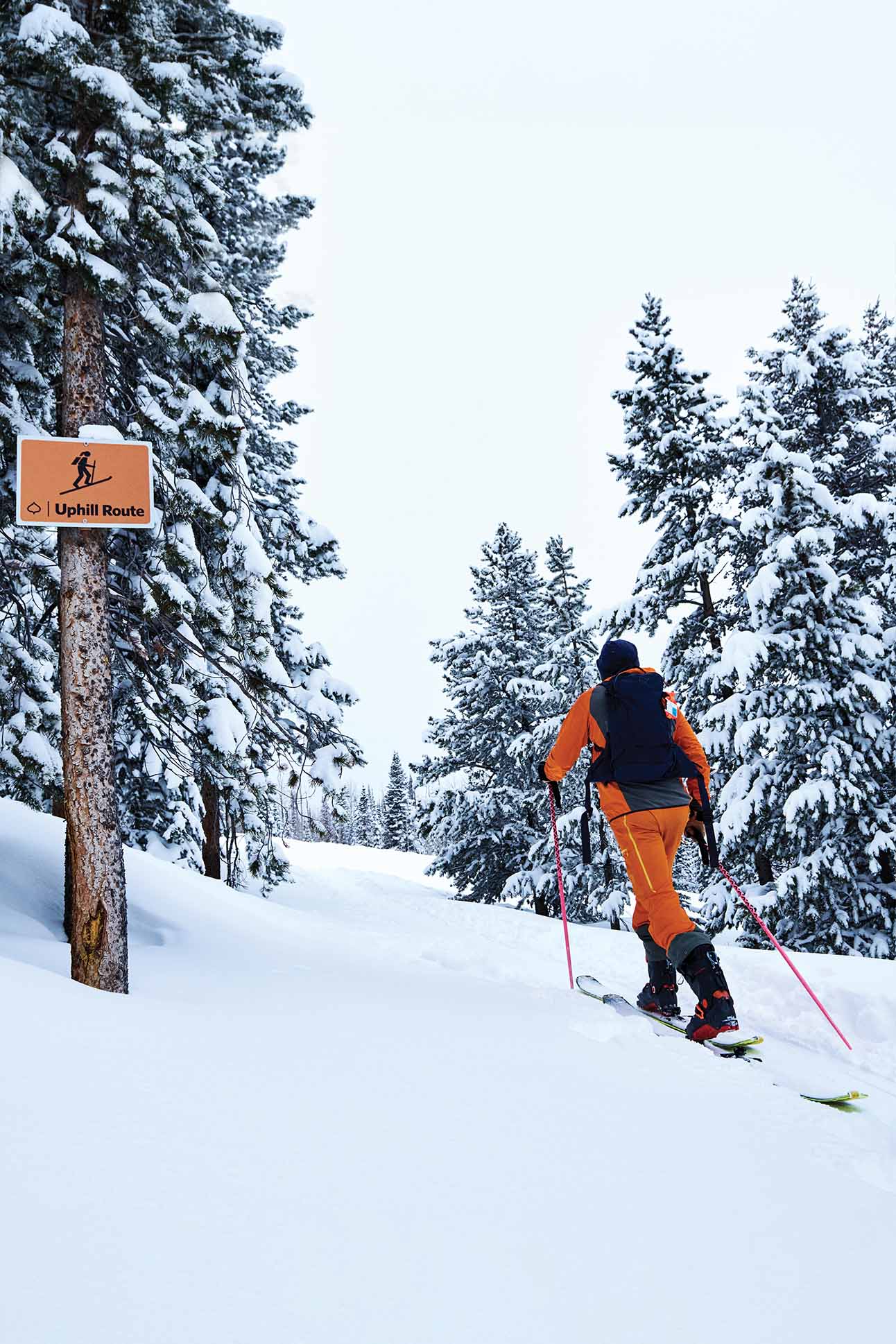
Some designated routes traverse groomed terrain while others have a backcountry feel, winding in and out of the trees.
You don’t have to be an athlete to achieve the uphill high. Megan Coates, a recent Roaring Fork Valley transplant, was quick to embrace Aspen’s uphill scene. After fine-tuning her skills at a free skinning clinic, she bagged 67 ascents in her first winter season. “Climbing a mountain is always a humbling experience,” she says, adding that the flexible hours—a rarity at most mountains—are ideal for her schedule as a mother of two.
Typically, I see a dozen or so uphillers on my morning skins, but, once a month, the entire Aspen skinning community comes together for a special full-moon dinner at Cliffhouse. By 4:30 p.m. the parking lot at Buttermilk is full of people putting skins on skis. I join the throng, trudging up the mountain’s main route and arriving at the restaurant just as the sky is turning soft sherbet hues. Inside, the dining room is already packed as sweaty uphillers of all ages gather and a band plays John Denver’s “Take Me Home, Country Roads.”
We line up for made-to-order stir-fries from the Mongolian Grill and toast our meal with Aperol spritzes, and by 7:30 p.m. we are slipping back into our gear. The moon is so bright I don’t even need to turn on my headlamp. Occasionally a hoot or holler from an exuberant skier breaks through the night’s silence. I relish the cold air on my face and the thrill of making turns beneath the glowing night sky. This, I think to myself, is truly an experience you can only have in Aspen.
Uphill Intel
Access: An uphill season pass costs $74, with $10 of the fee going to Mountain Rescue Aspen. shop.aspensnowmass.com
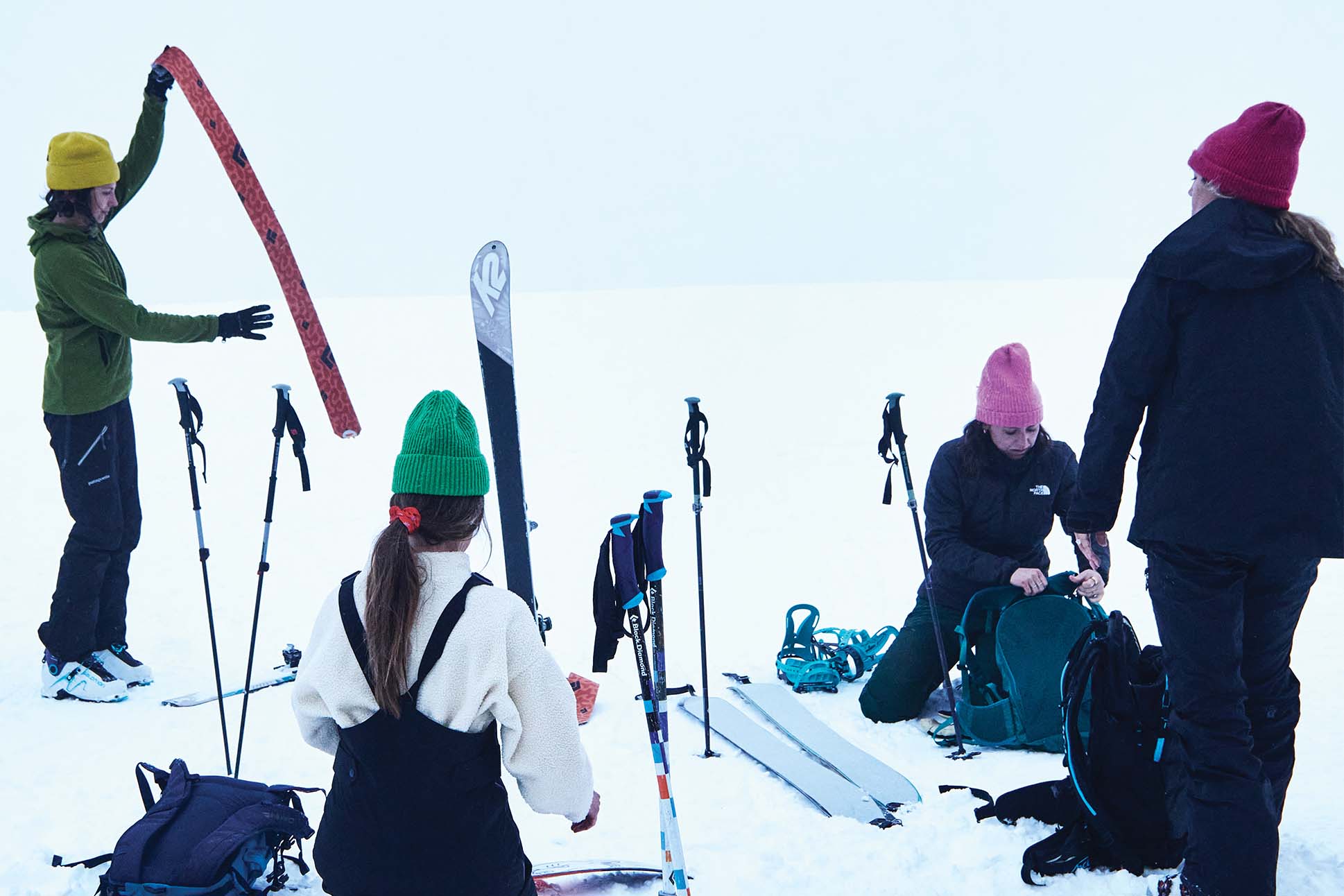
Gear: Ute Mountaineer rents and sells uphill gear. You will need boots, bindings, touring skis or a splitboard, skins, poles, and a pack. utemountaineer.com
Etiquette: Stick to the designated routes. During operating hours, be mindful of downhill traffic. During off hours, keep an eye out for snowcats that may be grooming the terrain.
Favorite Routes from Easiest to Toughest
Snowmass: A great beginner route, Elk Camp climbs 1,386 feet from Base Village to Elk Camp Restaurant.
Buttermilk: Tiehack’s 1,683 feet of elevation gain pays off with panoramic views toward the Maroon Bells.
Aspen: Starting from The Little Nell, it’s a quad-screaming 3,267-foot ascent to the top of Aspen Mountain. Uber-fit locals can get it done in under an hour.
Aspen Highlands: Rise early to make it to the Merry-Go-Round Restaurant before the 8:30 a.m. cutoff so you can continue to the top of Loge. The route is intense, with 3,635 feet of elevation gain—but you almost always score fresh powder on the way back down.