
By Jen Murphy
Photography by Sam Ferguson
When Colorado adventurers talk about winning the lottery, they aren’t referring to a cash prize. Each spring, the 10th Mountain Division Hut Association holds an online lottery for winter reservations at the state’s coveted backcountry huts. Nabbing one is the equivalent of hitting the jackpot. I’d been trying to score a spot for years—with no luck. So last winter, I took chance out of the equation and booked a trip through Aspen Expeditions, a local outfitter allotted a set number of hut nights each year.
This strategy secured my accomm-odation and also paired me with a knowledgeable backcountry guide who would prepare meals and bring essential gear, like avalanche beacons and sleeping bags. The guide would also know the best lines to ski near the hut.
With four distinct ski mountains and a liberal uphill skiing policy, Aspen Snowmass has enough terrain to explore for an entire season and never repeat a run. So why, my boyfriend asked, would I want to leave the comforts of our suite at The Little Nell mid-vacation to stay in a spartan hut in the woods that could only be reached on skis? I wanted an adventure, I explained. There was something deeply appealing about ski touring far into the snowy wilderness, away from slopeside DJs and après bars. I was craving the quiet and solitude only nature can provide and was also selfishly motivated at the prospect of having endless powder turns all to myself.
Ski touring has long been a winter pastime in Europe. But before it was embraced as a form of recreation, European armies put troops on skis for a strategic advantage on snowy battlefields. In the early 1940s, on the brink of World War II, the U.S. War Department began experimenting with mountain soldiers and chose Colorado as the training ground for more than 11,000 troops, including the Army’s elite 10th Mountain Division. After serving in World War II, 10th Mountain Division soldier Fritz Benedict returned to Aspen with the idea of setting up a winter hut system to rival what he saw in the Alps. Today, the system, located on the division’s former training areas between Aspen, Vail, and Leadville, consists of 14 huts—many named in honor of World War II soldiers—and connects to another 24 in the area’s farther reaches. Linked with 300-plus miles of skiable routes, it’s the largest system of its kind in North America.
When it came to choosing a hut, Chloe Childs, Aspen Expeditions’ operations director, explained that the 10th Mountain Division Huts are backcountry-beginner friendly with low-angle approaches, whereas connecting huts, like those in the Braun Hut System, are in avalanche terrain and require more experience to access, even with a guide. With that in mind, I booked a single night at McNamara Hut for my backcountry hut baptism. One of the original 10th Mountain Division Huts, it was built in 1982 as a memorial to Margy McNamara, the wife of former U.S. Secretary of Defense Robert McNamara. (The couple frequently vacationed in Aspen Snowmass.)
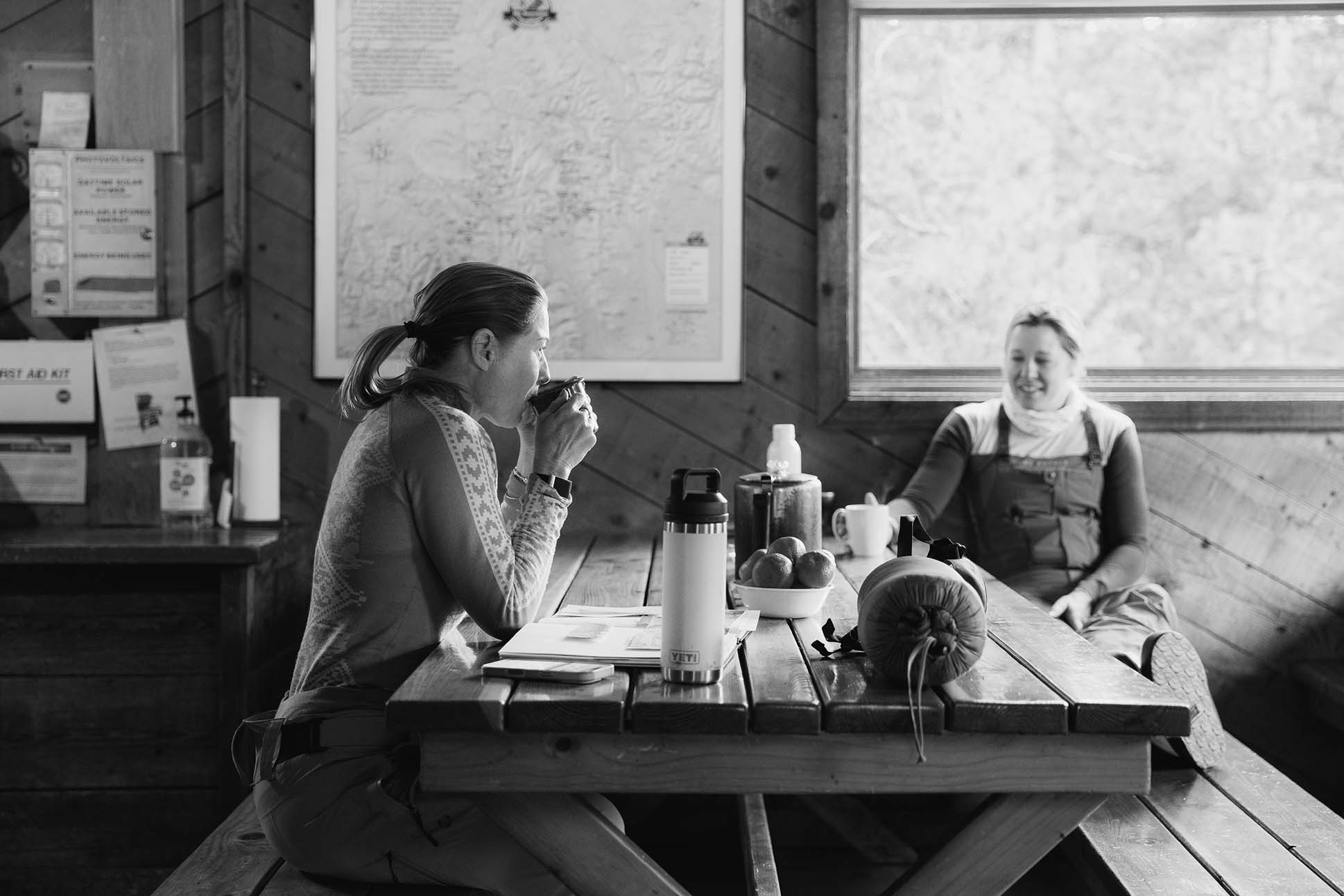
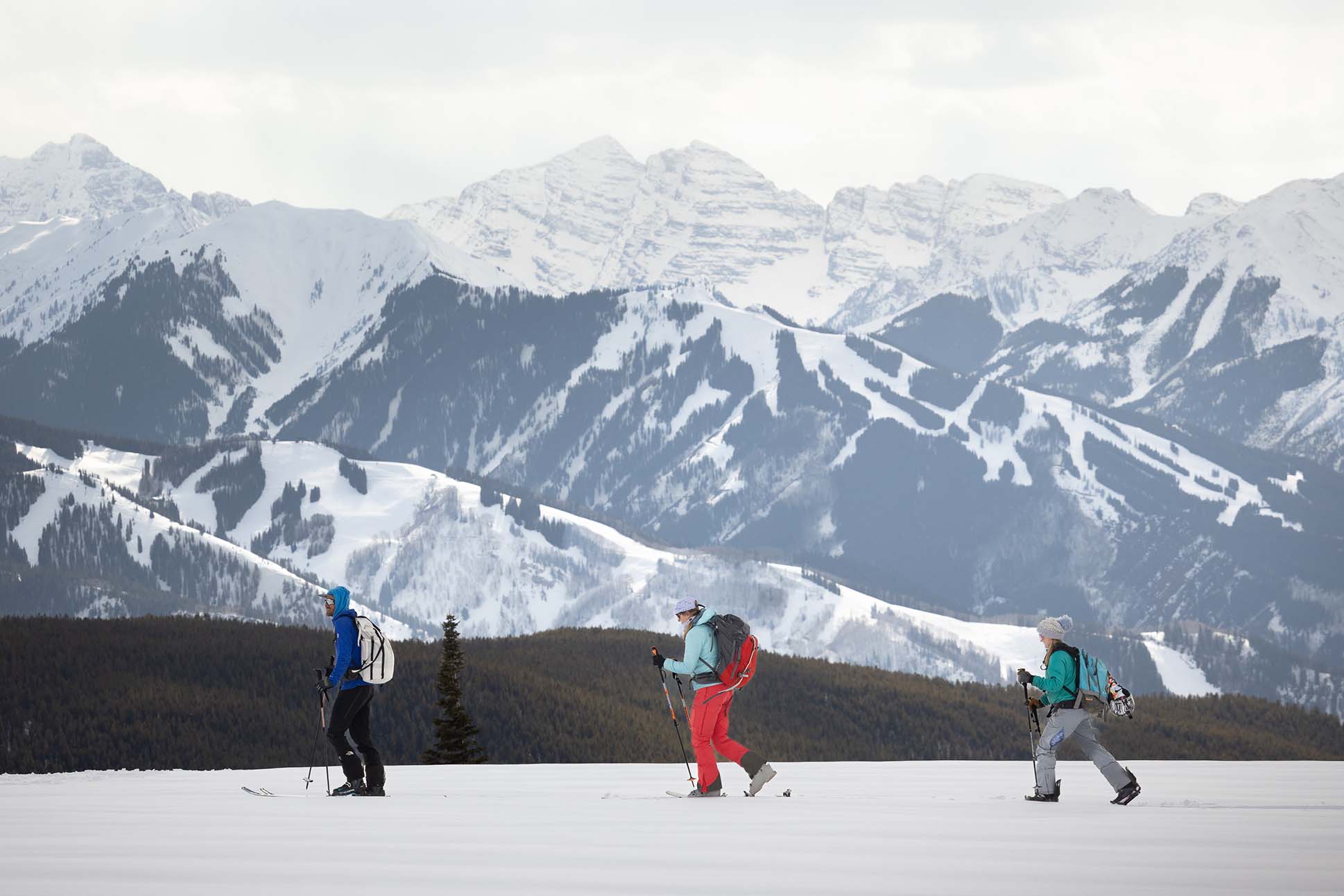
Part of the appeal of McNamara Hut is that the trailhead leading to it is less than five miles, and about a 10-minute drive from downtown Aspen. From there, the uphill trek is just over six miles, with 2,285 feet of elevation gain. Childs promised the views would be worth the effort. So the next morning, I left my boyfriend and Ajax Mountain behind for the backcountry.
It had been a subpar winter, but my early March reservation coincided with a much-needed snowstorm. Even so, the first quarter mile of trail was mostly dirt, so my guide, Nathan Rowland, and I bootpacked until we found enough snowy coverage to attach our skins—sticky adhesives that prevent you from slipping downhill—to the bottoms of our skis.
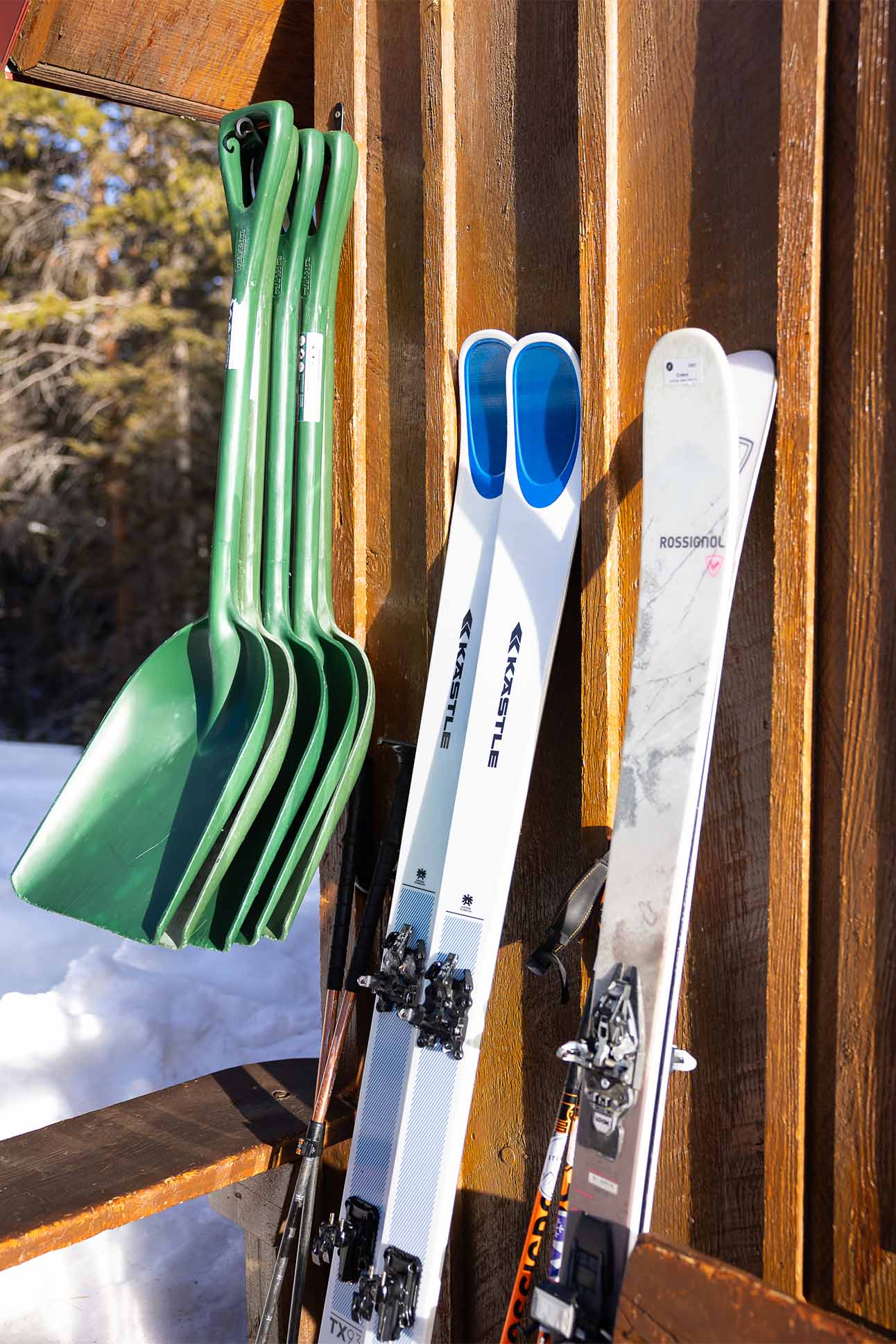
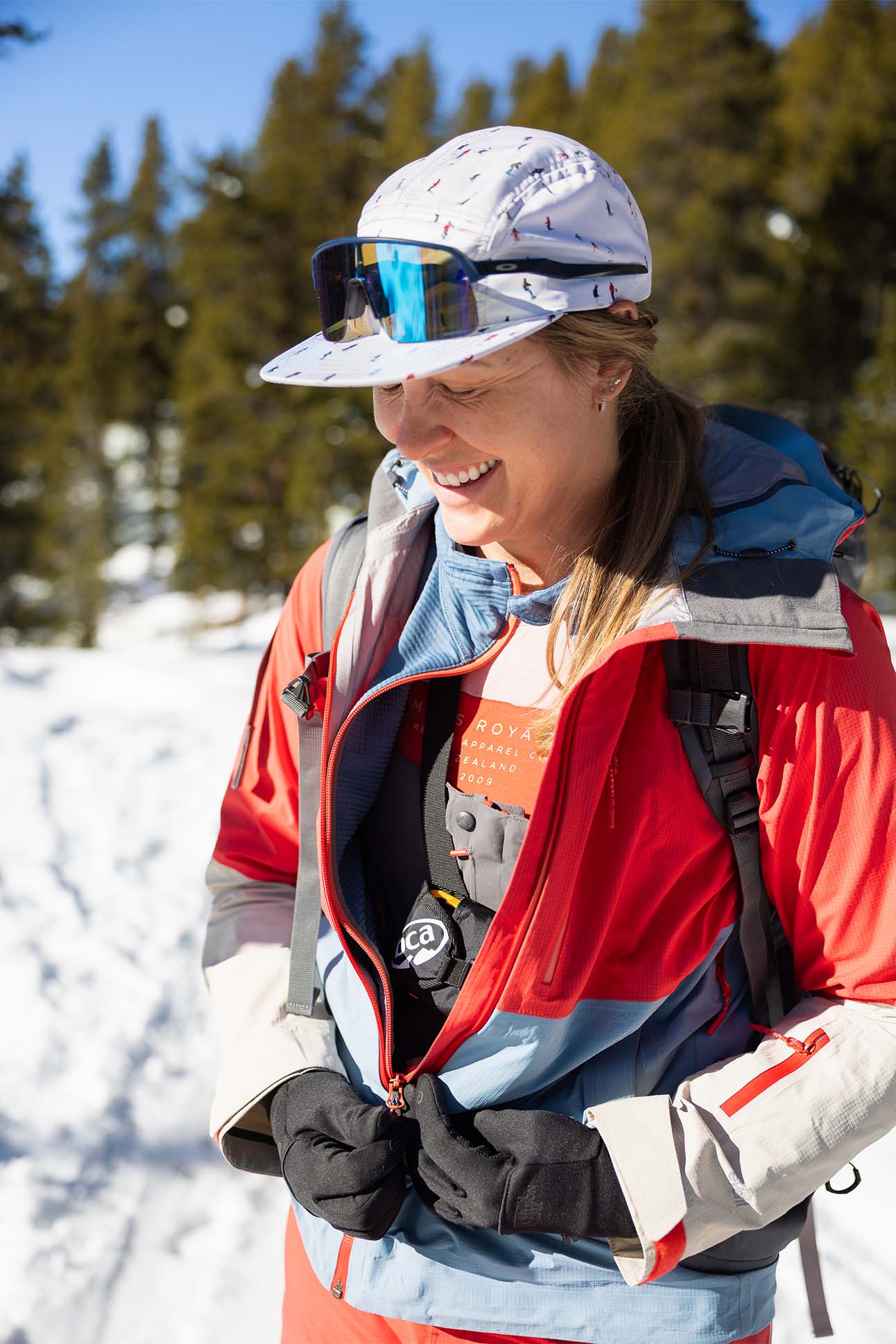
Rowland is tall and lanky, and the fact that he could effortlessly hold a conversation as we climbed uphill—with a pack three times as heavy as my own—underscored his awe-inspiring cardiovascular fitness. Even though we were in low-angle terrain, he had me kitted out with avalanche safety gear, including a shovel, probe, and beacon. I had recently completed a basic avalanche safety course, but he still gave me a refresher on how to use the equipment.
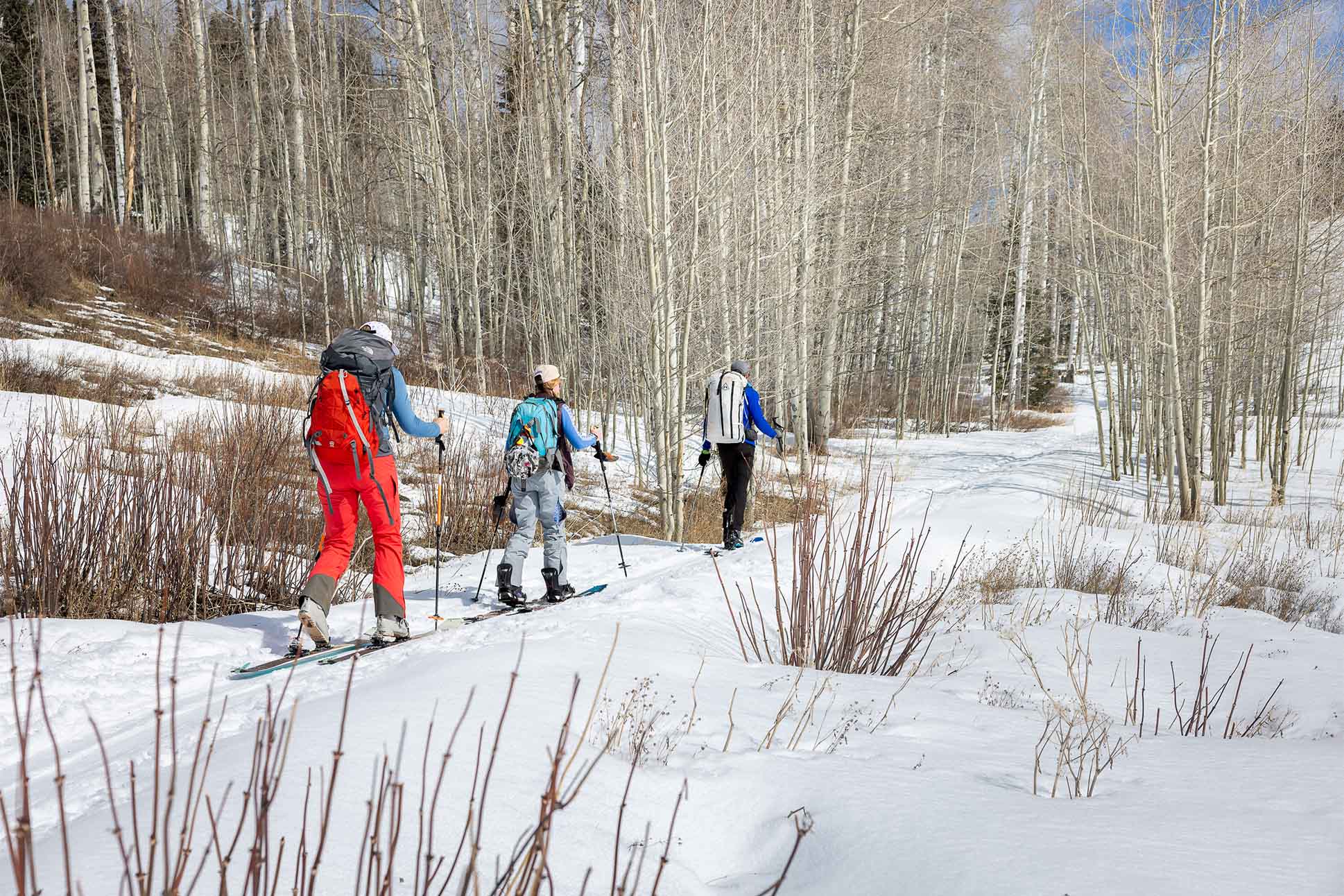
The trail gently meandered beneath snowy aspens, and the farther we went, the more removed I felt from the stresses of modern life. For me, skinning is both meditative and physical. I find it to be the most intimate way to interact with the mountains. The slow, rhythmic pace of our journey allowed me to appreciate the sun’s rays sparkling across a snow-covered meadow and fall into step with the soundtrack of my inhalations and exhalations.
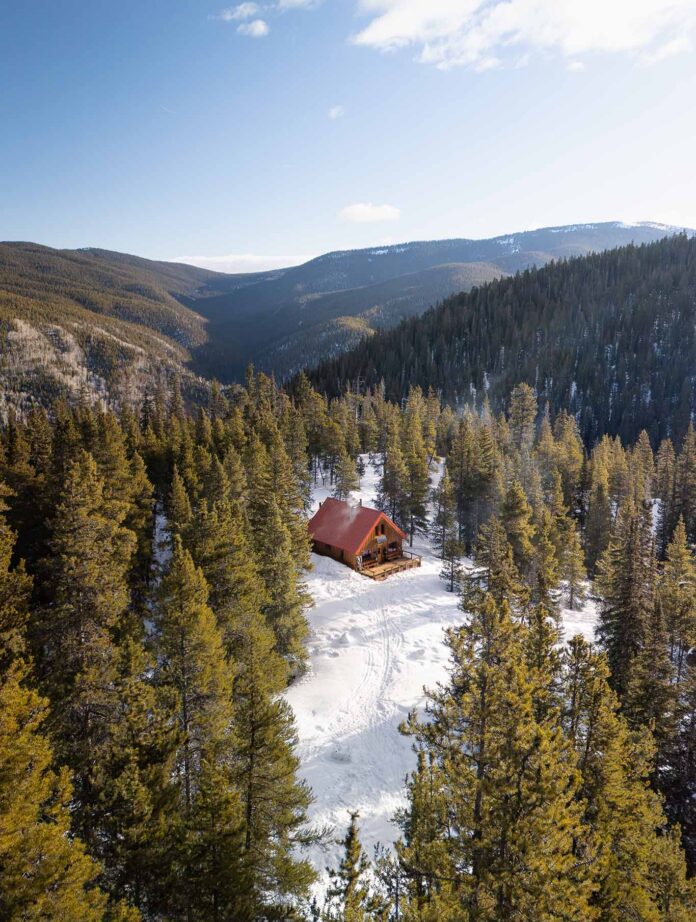
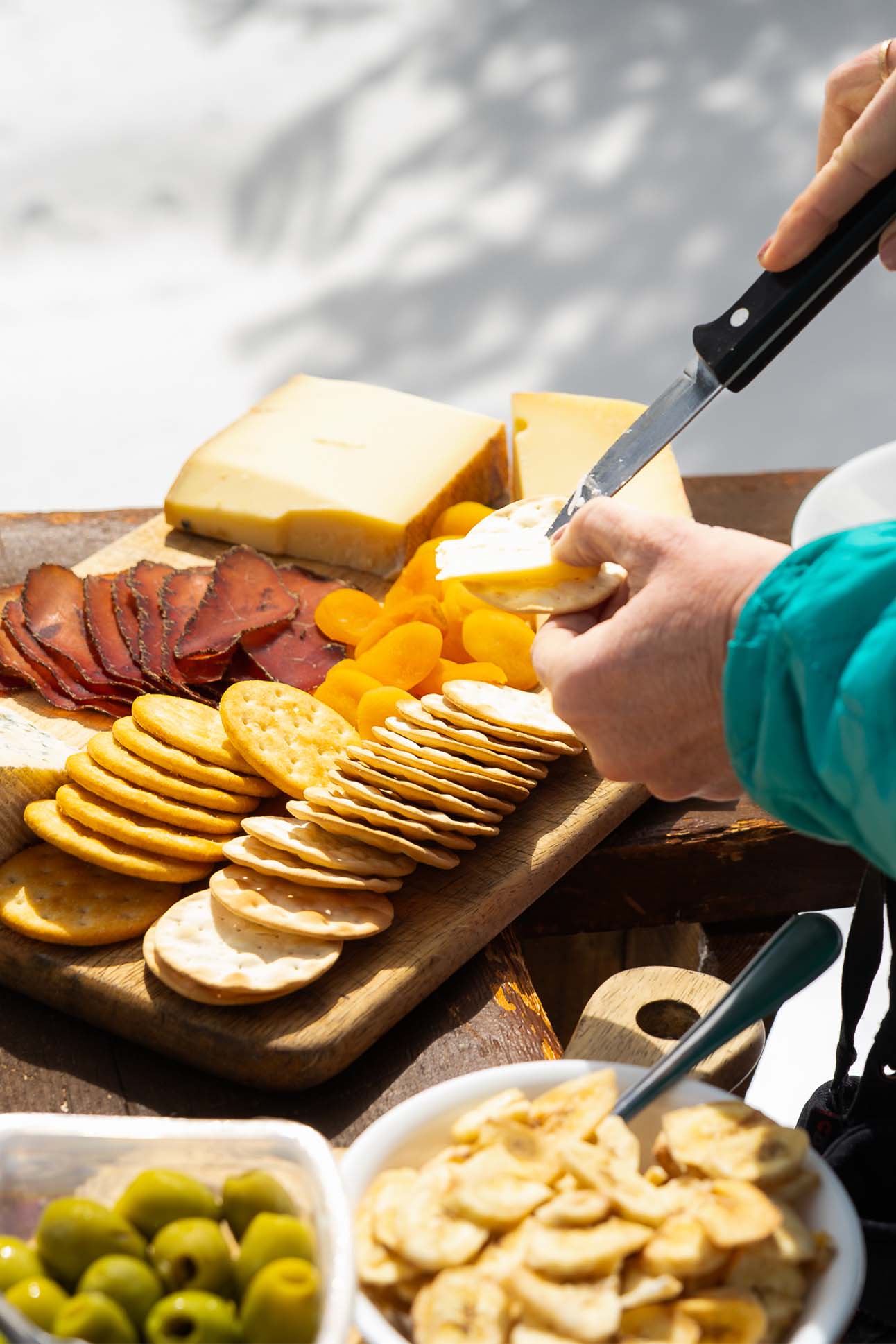
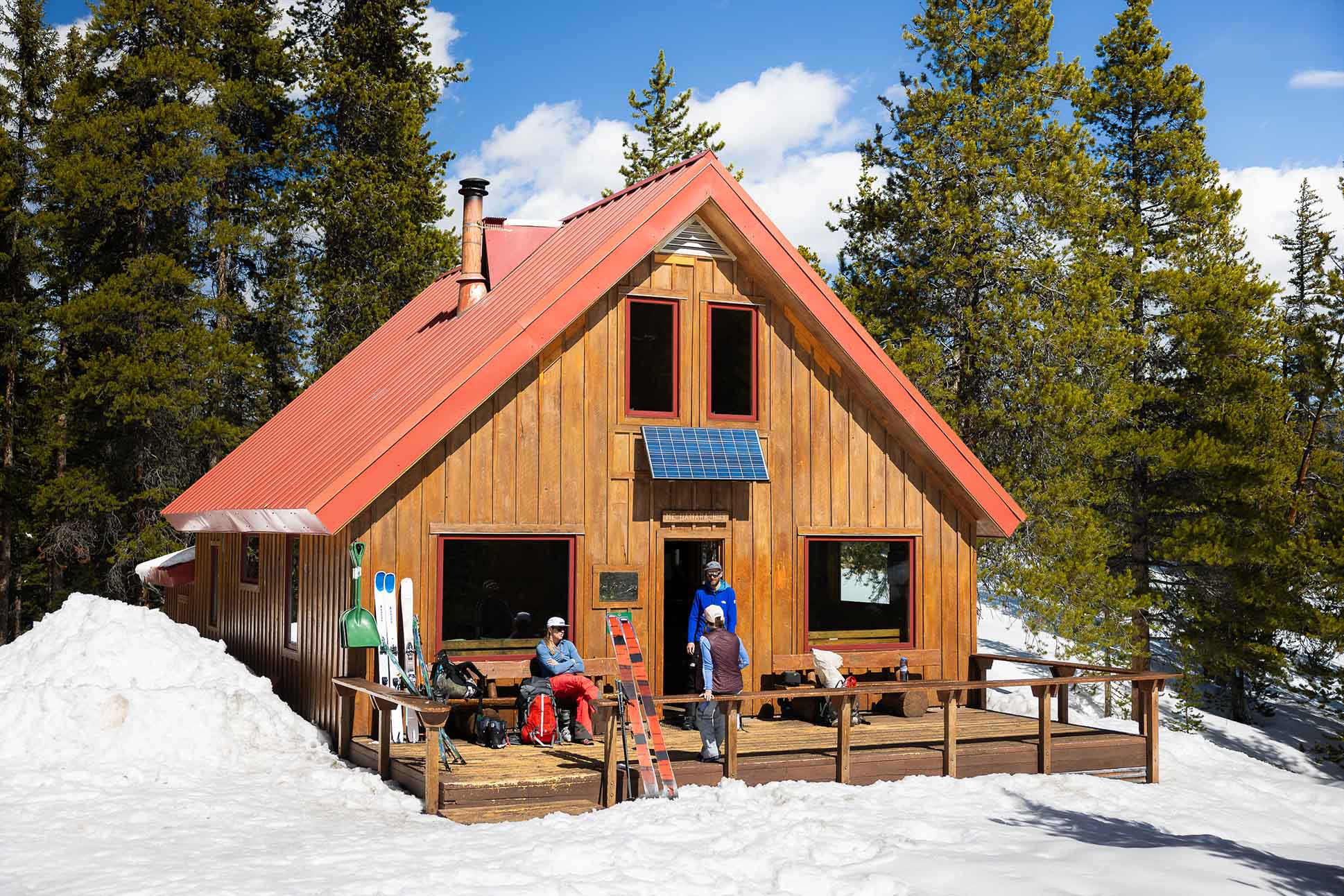
After 3.5 hours of climbing, we reached a clearing and laid eyes on a picturebook log cabin hut with a sprawling sundeck. “Welcome!” Rowland shouted from a few hundred feet ahead of me, already clicking out of his skis to open the front door and reveal a rustic living area. I left my boots and skins to warm by the wood fire as I followed him upstairs. In total, the hut could accommodate 16 guests between a nine-person bunkroom and private room upstairs, and separate bunkroom downstairs. It felt like a palace—and Rowland made it feel like full-service luxury. As I unpacked, he chopped firewood and set out a tray of cheese and smoked salmon on the deck.
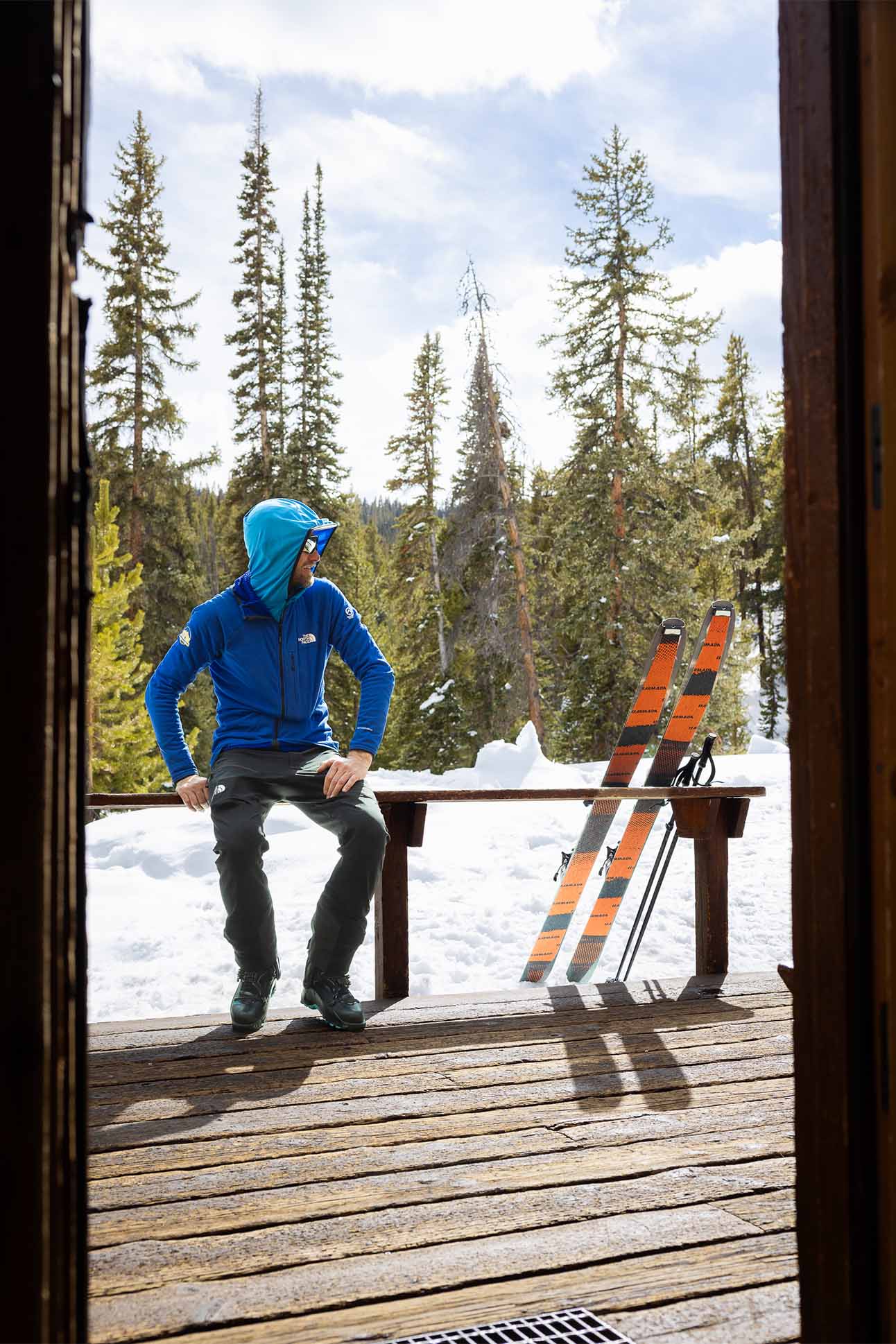
What appeared to be an après-ski spread was actually ski fuel. It was just after 1 p.m. and we still had plenty of daylight hours to explore the surrounding terrain. By 3 p.m. we were again geared up and heading into trees dusted with glitter-like snow. Just over a mile away, we reached the broad summit of Bald Knob and its 360-degree views of Aspen, Maroon Bells, Pyramid Peak, Mount Sopris, the Elk Range, and the Holy Cross Wilderness. After reveling in the panorama, we milked all of the turns we could make between the trees until our legs screamed for mercy.
Back at the hut, as Rowland prepared dinner, I sat on the deck awaiting the alpenglow—the unique phenomenon that appears as a pinkish hue against the mountaintops just after sunset. Inside, a fire was roaring, and Rowland had laid out a spread of pho-inspired Asian rice noodle soup while chocolate-caramel chip cookies baked in the oven. Without the distraction of cell service or a Wi-Fi signal, we sat around the wooden dining table and savored each bite while reliving highlights from the day. The simplicity of it all was deeply satisfying. Exhausted, I was snuggled into my sleeping bag reading a book by the light of my headlamp just after 8 p.m.—and sound asleep before 9 p.m.
The next morning, I woke well before sunrise. Rowland had already prepared coffee and a breakfast of bagels, lox, cream cheese, and capers. Over breakfast, I read through the guest book’s detailed stories and added my own: “Honored to be a character in this cabin’s legacy,” I scribbled, “and truly appreciative to be away from modern distractions and totally immersed in the wilderness.”
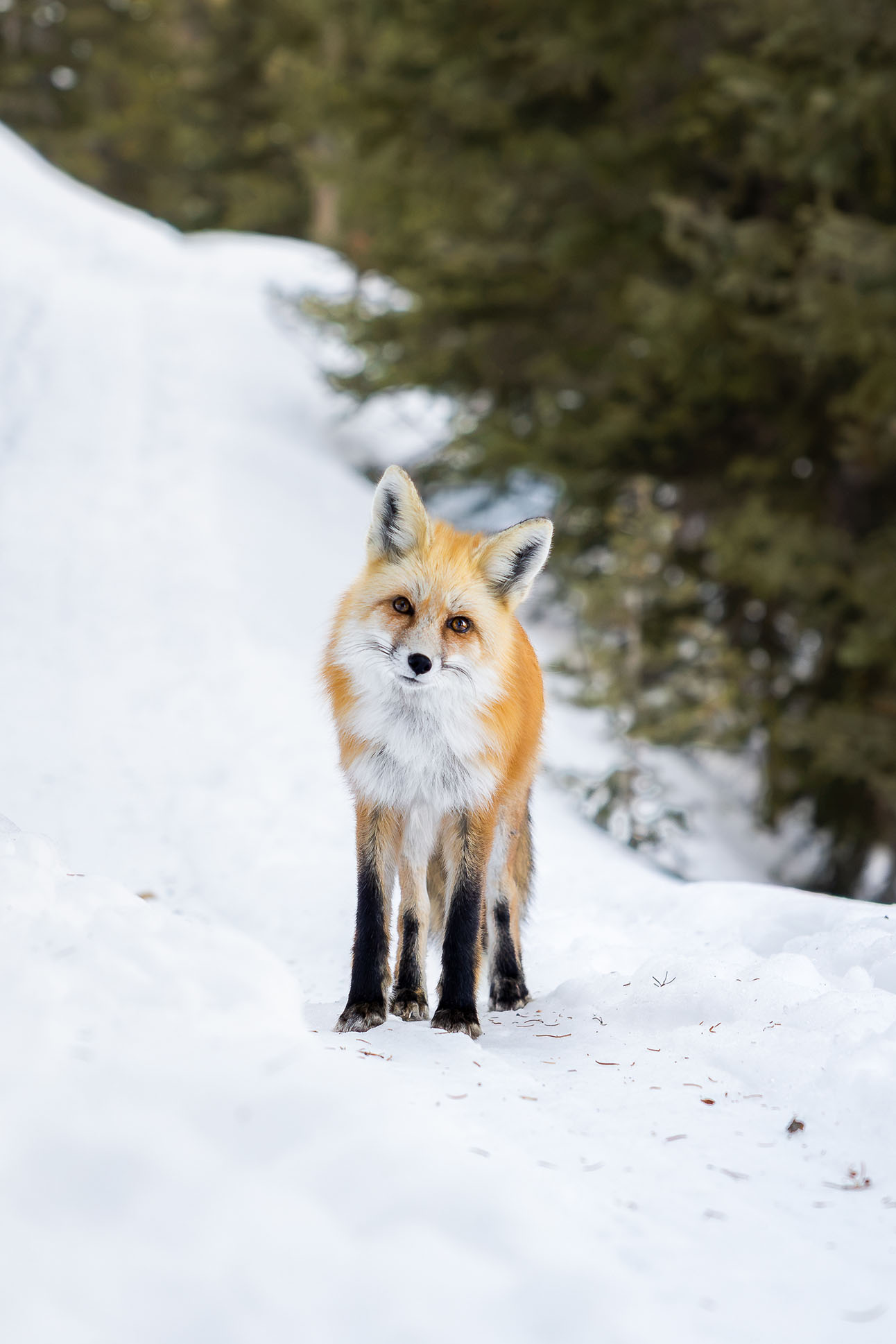
Packed and geared up, we began the journey home, a cruisey descent back to the trailhead. Overnight, the weather had warmed, leaving dirt patches for us to navigate, but the slower pace meant more time to observe the surrounding wilderness—and when I stopped to adjust my binding, I locked eyes with a curious fox who followed us down the trail as if to say, “don’t go.” Back at the car, as we packed up our gear, I noticed the fox staring down at us. Rowland and I agreed that he must be the hut’s unofficial guardian, silently telling us that, next year, I should return.
To learn more or plan a guided hut trip, contact The Little Nell’s concierge team.