
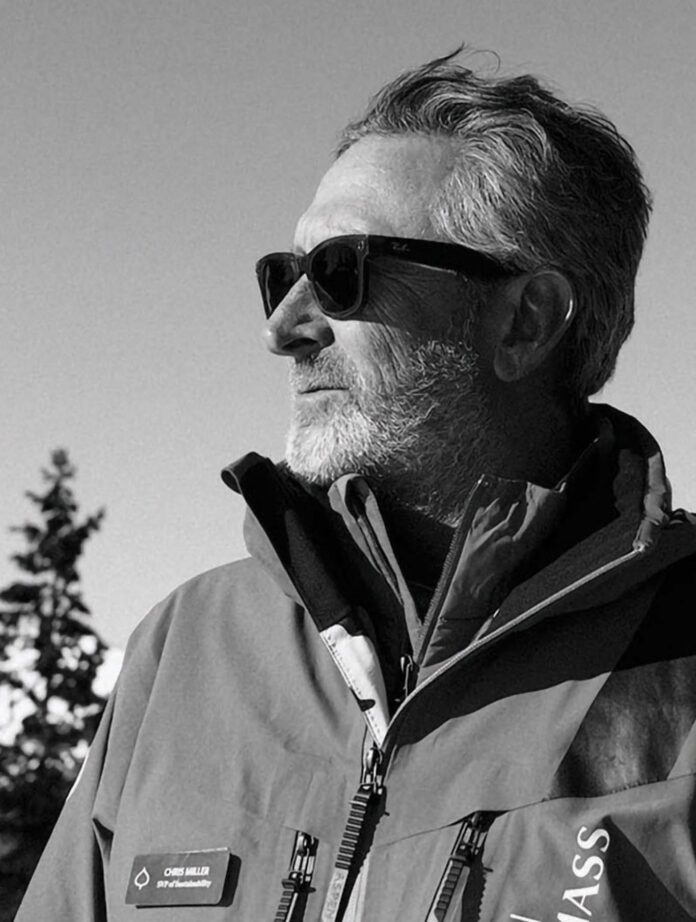
What does Aspen One’s approach to sustainability actually look like in practice?
We’ve come to understand the importance of moving beyond incremental greening. Our theory of change is built on four levers: building innovative sustainability solutions into our operations, using our brand platform and relationship with our guests to advance bold policy advocacy, strengthening the communities where we live and work, and giving back through our two company foundations.
On the operations side, that means electrifying everything—our two newest Limelight hotels are all-electric, meaning no fossil fuel combustion inside the buildings, and we’re installing what we believe is the first battery energy storage microgrid of its kind at a ski lift in the country, at the Elk Camp six-pack in Snowmass. The system stores nearly 1,900 kilowatt-hours of energy—enough to keep the lift running for two to three hours on battery power alone—and replaces a diesel generator that we previously relied on for backup. Our utility, Holy Cross Energy, runs on roughly 90 percent renewable power, so we’re not just eliminating a fossil fuel backup, we’re replacing it with clean energy.
What’s something people misunderstand about corporate sustainability?
That it’s working. Voluntary, incremental action may have felt sufficient at first. But winter is still shrinking. It’s clear we must think beyond marginal gains that simply do less bad and make choices that reshape the system.
What does community mean to you?
It means showing up for each other—not just in words, but with real resources. Last year was our largest philanthropic year ever. We gave nearly $5 million in 2025 alone. That giving flows through two employee-led funds. The Environment Foundation, now nearly 30 years old, has directed dollars toward climate advocacy and protecting wild places like the High Elk Corridor between Aspen and Crested Butte. The Caring for Community Fund focuses closer to home: healthcare access, mental health and addiction services, crisis support, and job training for valley families.
Both are funded by employees through payroll deductions, matched two-for-one by the company. More than 1,600 of our people contribute. That’s not a corporate program—that’s our community investing in itself: the lift mechanic, the ski school instructor, and the CEO, all in together.