
By Jen Murphy
Images by Trevor Triano
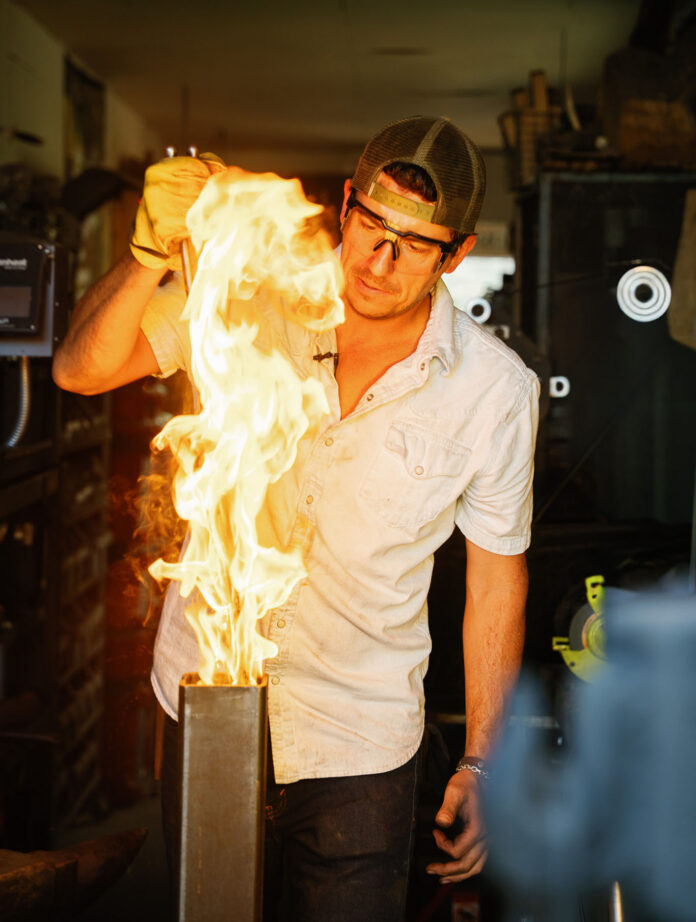
It’s midwinter and the temperatures are appropriately brisk, but the cold is hardly a concern at a small metal shop in Glenwood Springs, Colorado. The windows are thrown wide open, framing the snow-crowned Mount Sopris and inviting in a much-needed chill. Bladesmith Jordan Kepler wipes beads of sweat from his brow as he briefly admires the view before turning his attention back to the 2,000-degree Fahrenheit forge, a specialized furnace where he is heating a hunk of high-carbon steel.
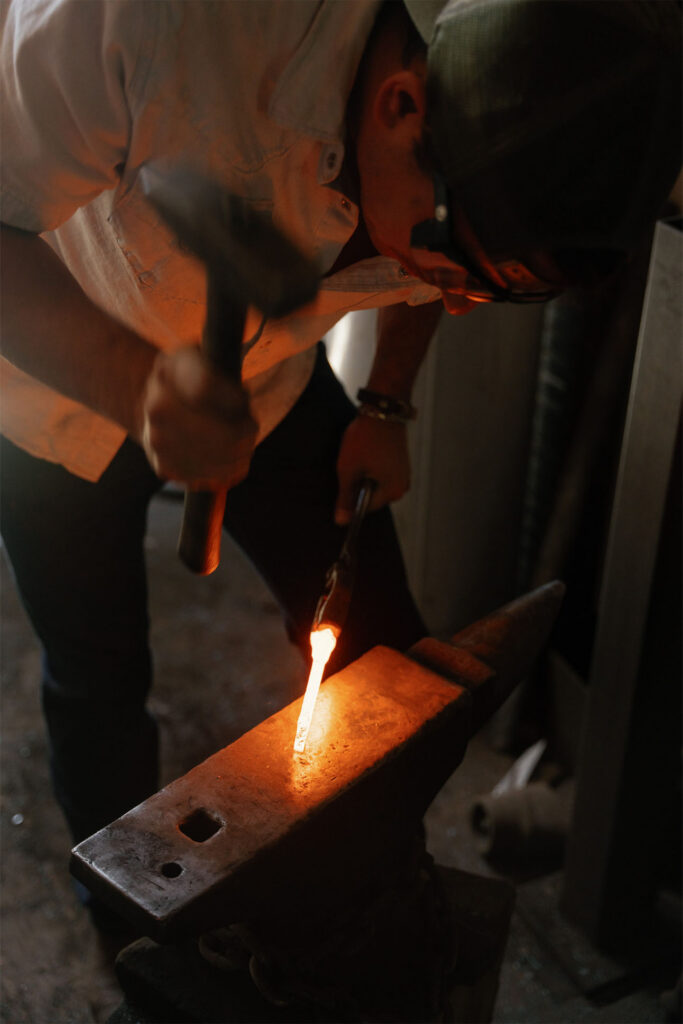
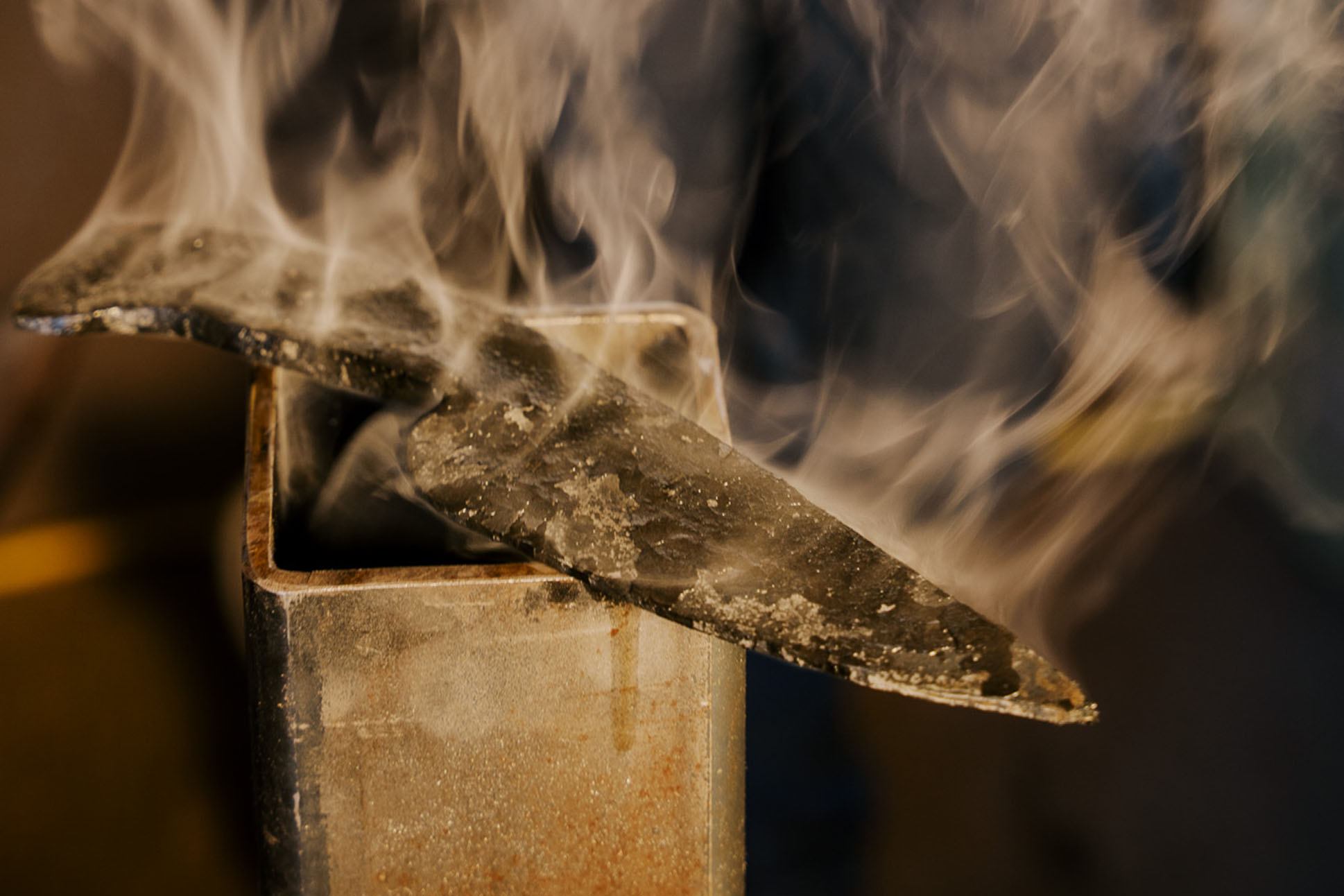
When the steel turns a fiery yellow-orange, he pulls it from the heat with a pair of medieval-looking tongs and places it on an anvil. Using intentional, rhythmic swings, he hammers the rectangular block into a thin blade that he will later sand and file. The perfectionist in him uses a magnifying glass to ensure that not even the tiniest dent or bump remains.
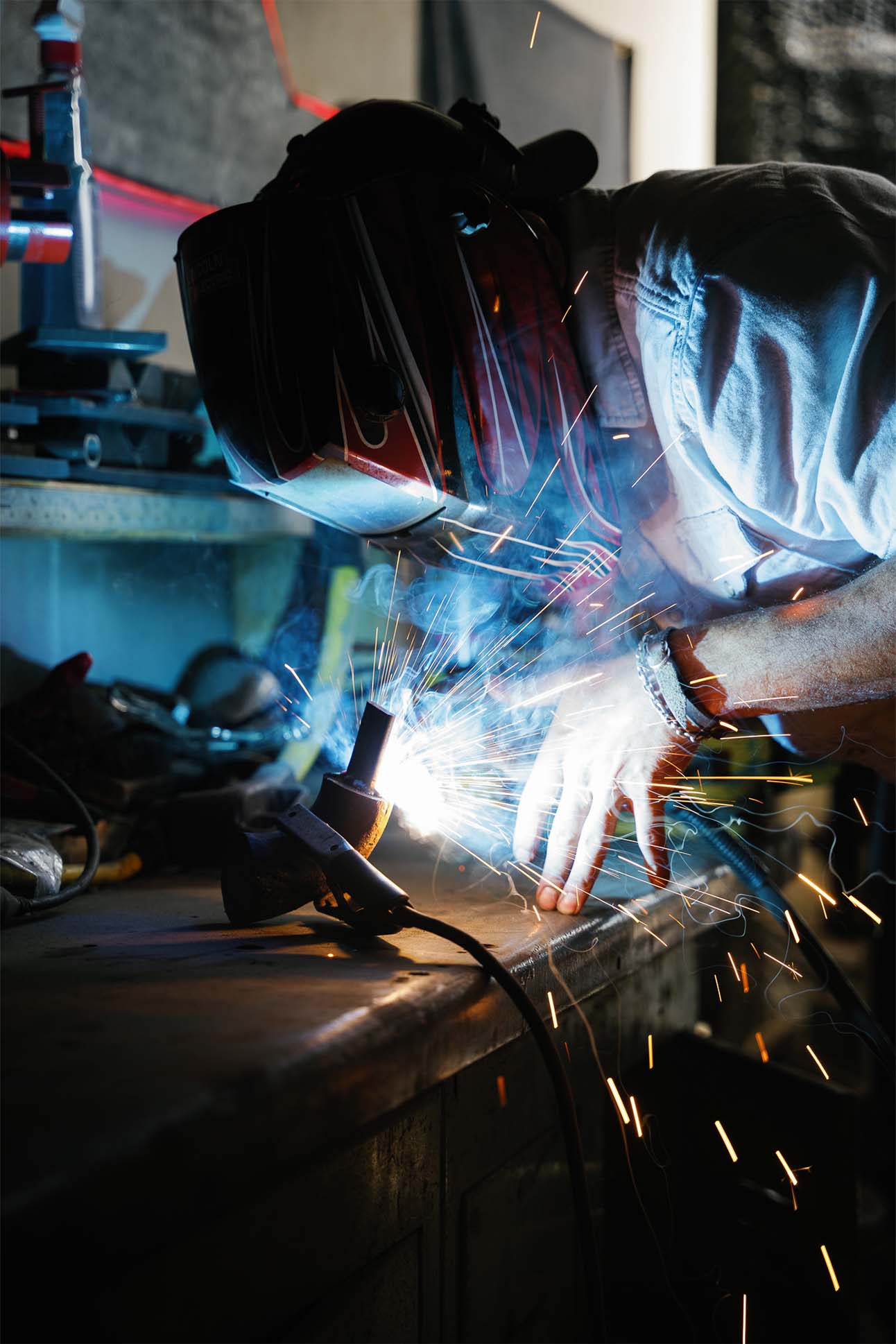
Kepler, 34, learned every facet of metal work, from grinding and welding to casting and machining, while studying industrial technology at California Polytechnic State University in San Luis Obispo. He was nothing if not an astute student, and yet the one thing he wasn’t allowed to make on campus—a knife—was the creation he most desired.


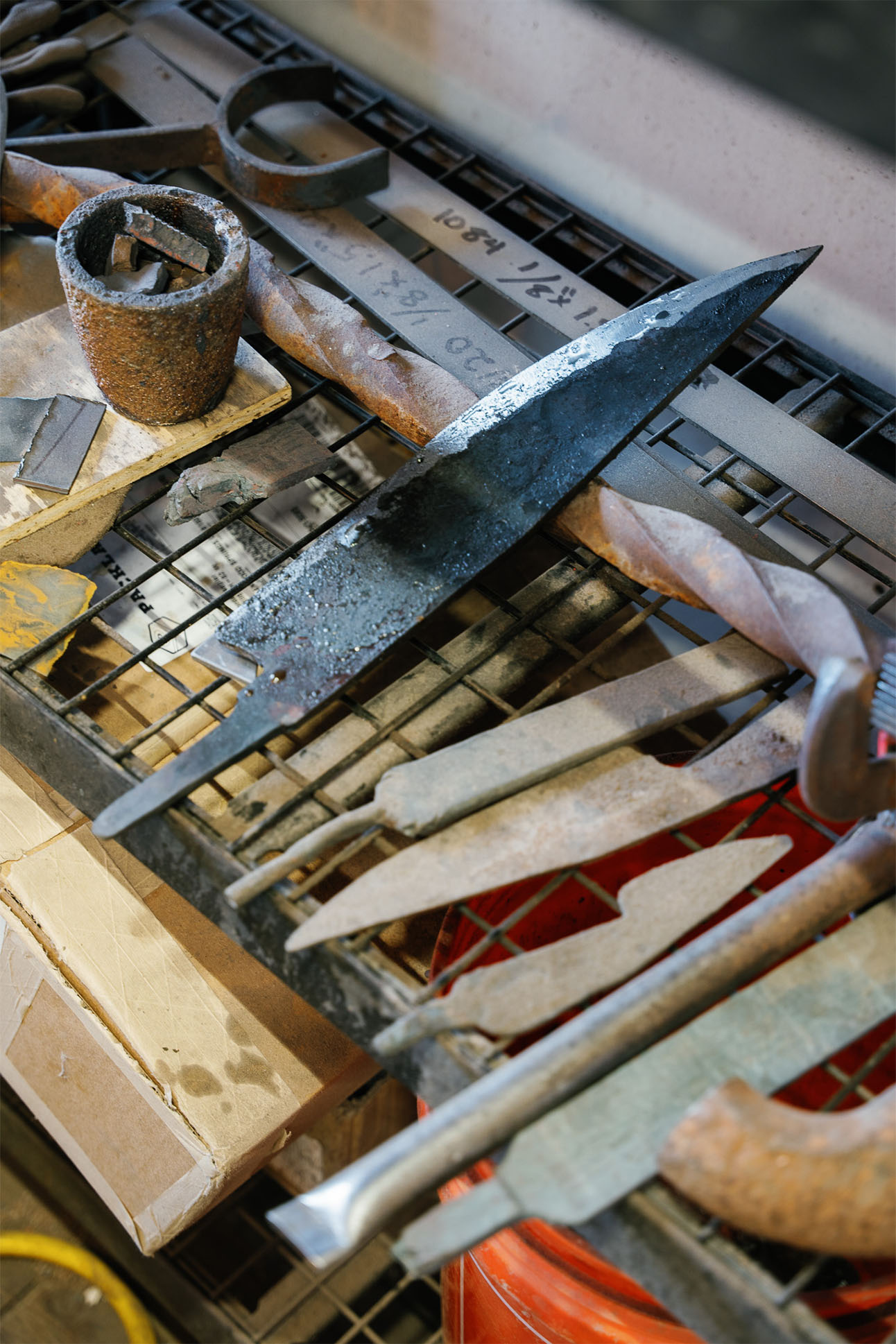
After graduating, while working a remote job as a UX designer for a tech company, he rediscovered his love of metal work in the wake of an unfortunate injury: a tear in his meniscus. “Destined to one leg for eight weeks, I needed a stationary hobby,” Kepler recalls. With some old tools, he constructed a Bowie knife, a large, fixed blade known for its distinctive clip point, and gifted it to a friend who was going on a camping trip. Requests for more soon poured in.
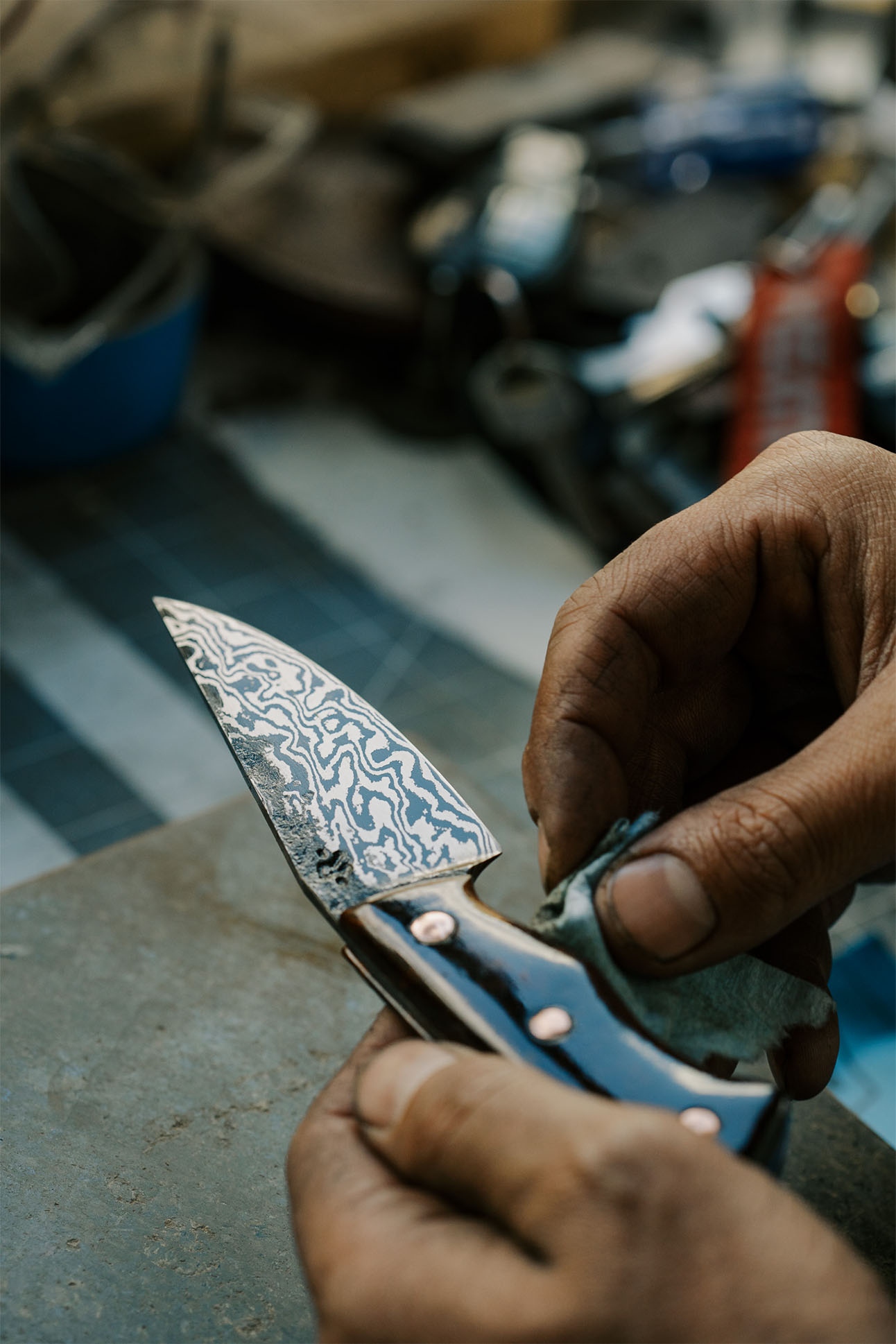
In his downtime, Kepler started taking classes and workshops with knifemakers, including Jason Knight, a master bladesmith from Tennessee who was a judge on the History Channel show Forged in Fire, and Cameron Alarcio, a knifemaking hobbyist who had been a contestant on the show, which applies a cooking show competition formula to bladesmiths. Kepler credits Alarcio with teaching him to forge Damascus, a type of steel prized for its distinct, wavy pattern created by folding and welding multiple layers of steel together.
When Kepler himself appeared on Forged in Fire during season eight, in 2021, he used the Damascus technique for the final challenge, crafting a ladder-pattern headhunter’s axe that earned him the $10,000 winner’s purse. “That win inspired me to turn in my keyboard for a hammer,” he says.
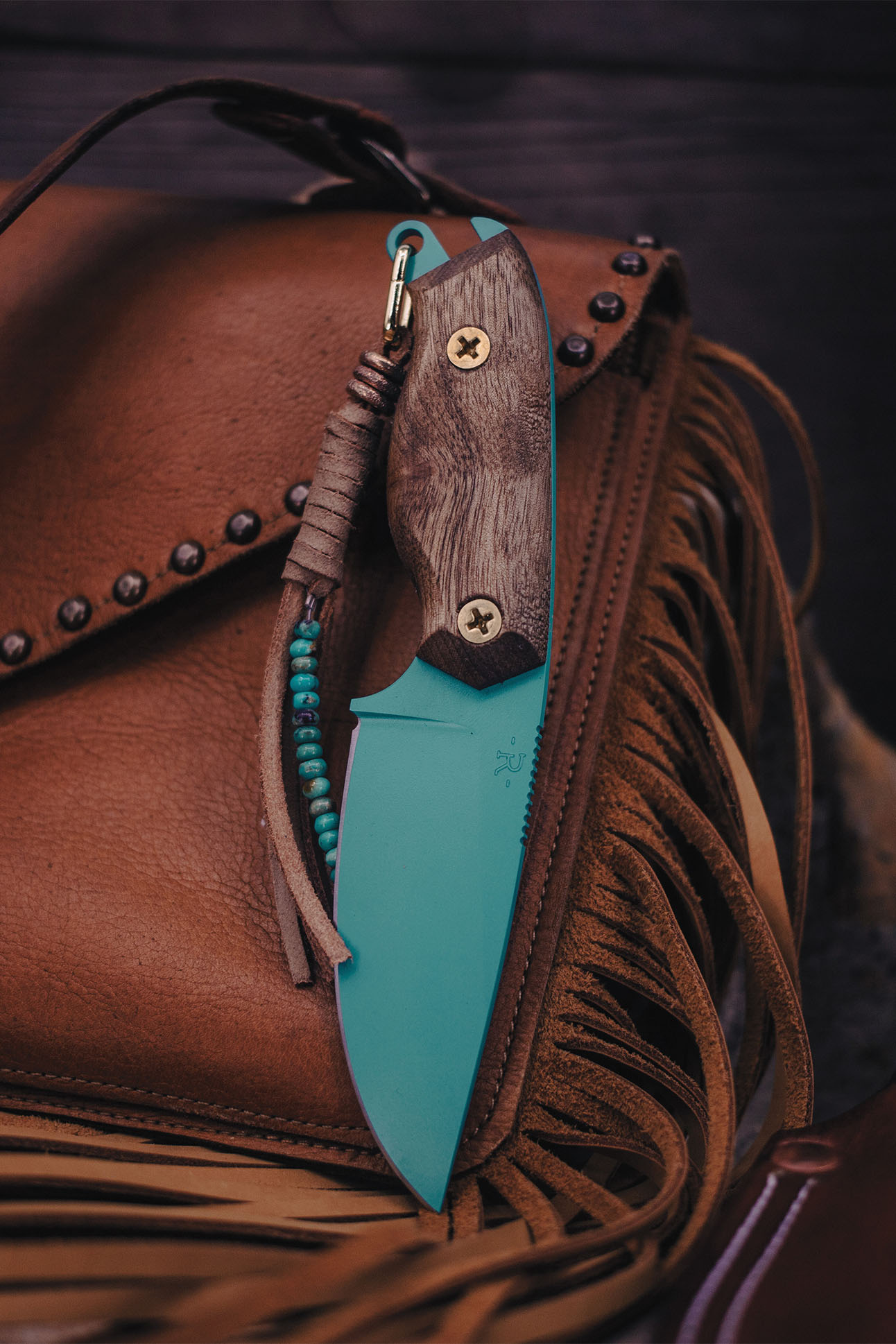
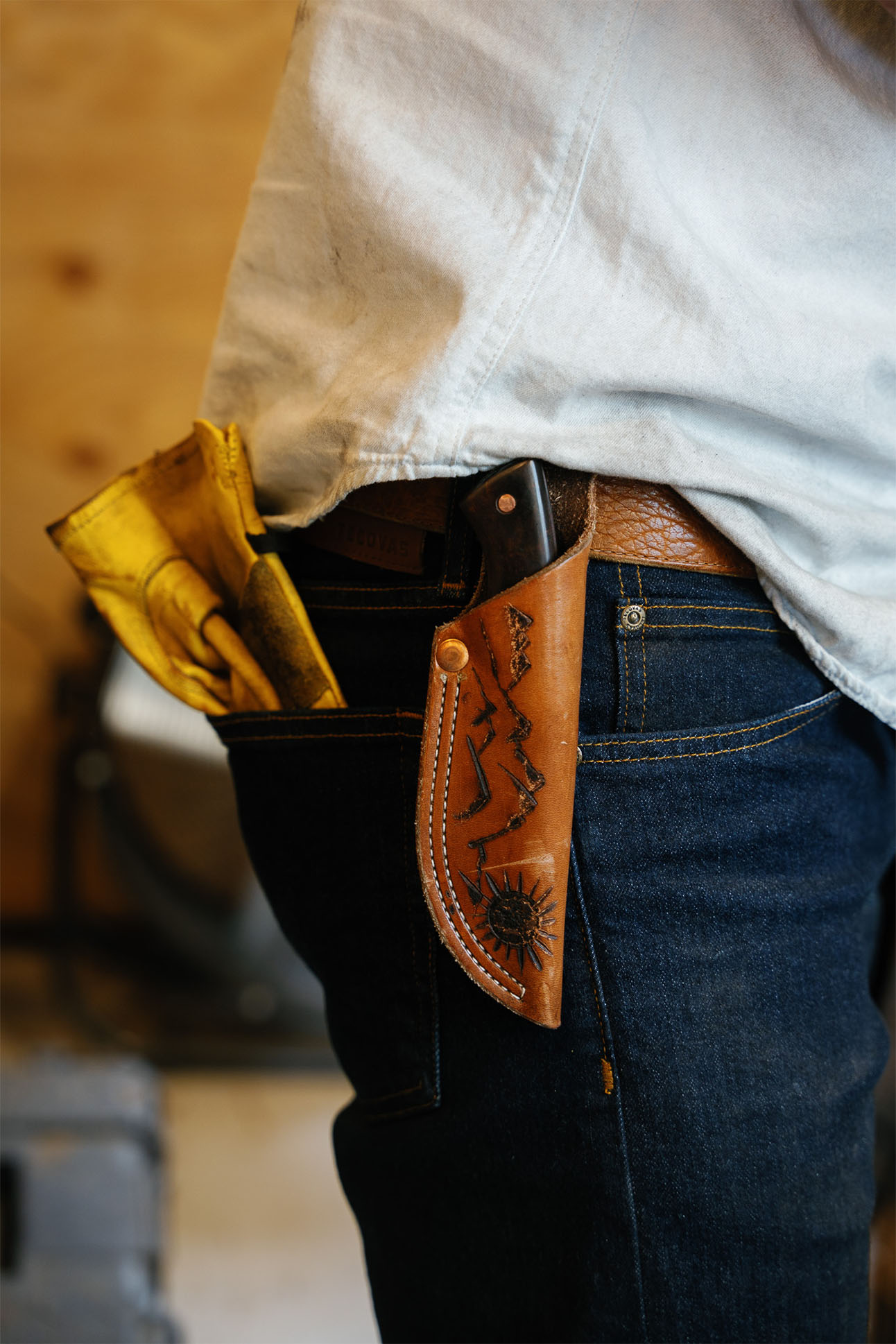
Tanned from time outdoors, with a laid-back swagger to his step, Kepler has the looks of a Yellowstone star. “People ask if I’m a real cowboy, and I tell them I can ride a horse pretty well, but I can definitely swing a hammer,” he says with a laugh. The shoe—or rather, the boot—certainly fits: Kepler’s Rancher Blades has become known for its signature cowboy coyote blades, which come in an array of eye-catching colors, from pastel pink to bold turquoise. Kepler says it took him six years to perfect the design. “It’s just the right size so you can wear it on your hip all the time without it being cumbersome. You can wear it when you’re camping, hiking, or riding horses, and use it for food prep or to skin an animal.”
Kepler finishes each blade in a Cerakote ceramic protective coating that comes in different colors, which he pairs with exotic-wood handles. The result is a best-selling blade that’s equally functional and fashionable. While he can forge two to three cowboy coyote blades in a single day, Damascus work can take more than 200 hours of labor.
Kepler also designs custom knives—many of which come with a backstory. One of his most treasured pieces started with a 68-million-year-old Tyrannosaurus rex tooth he acquired from Montana’s Hell Creek Formation. “That tooth inspired the biggest Damascus sword I’ve ever made,” he says. “It was nearly 39 inches long and overall there were 19,000 layers of Damascus that I tried to make look like the pattern of a diamondback rattlesnake.” The tooth is encased in 14 karat gold at the bottom of the sword’s gaboon-ebony handle. The piece took 210 hours to complete and sold for $72,000.

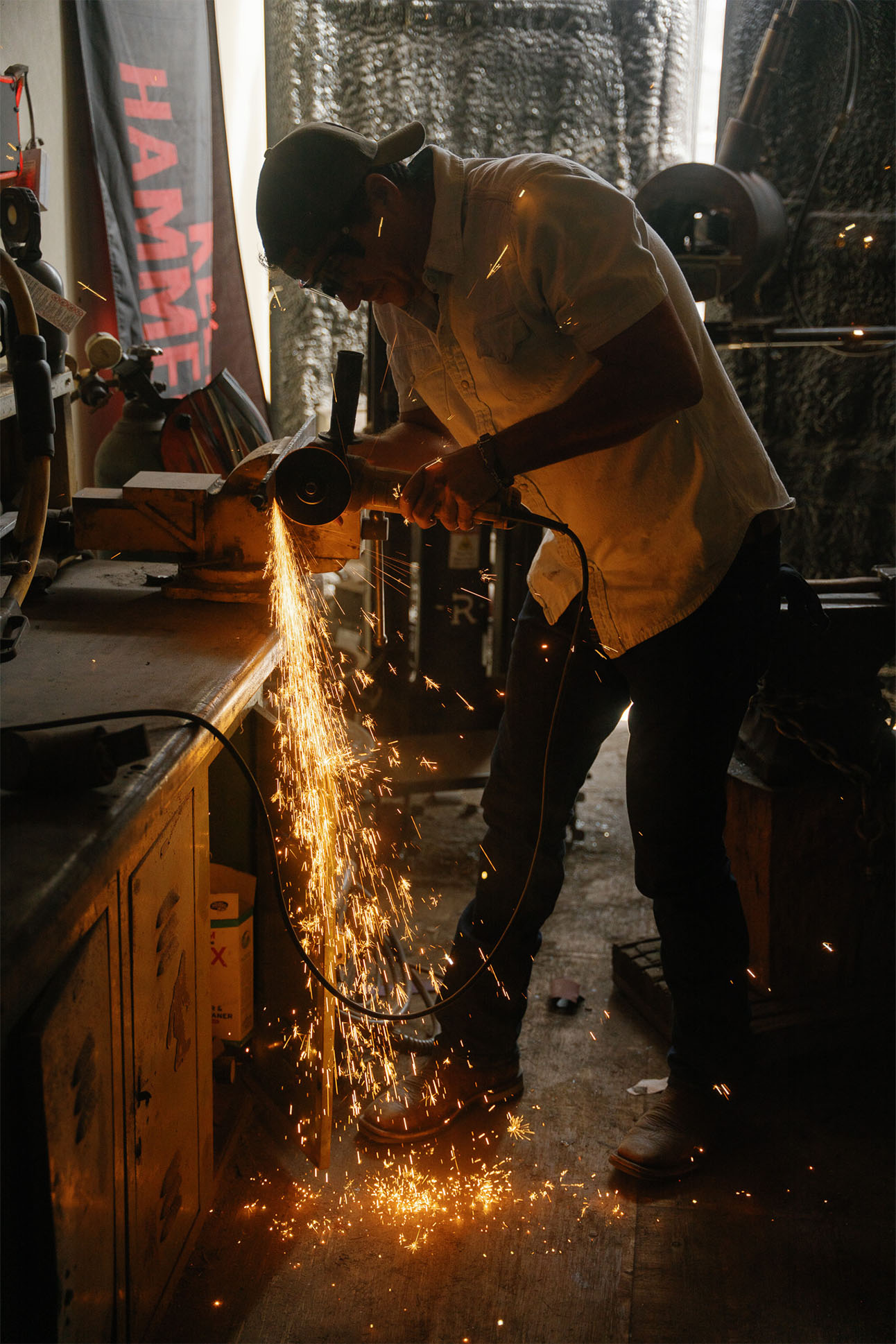
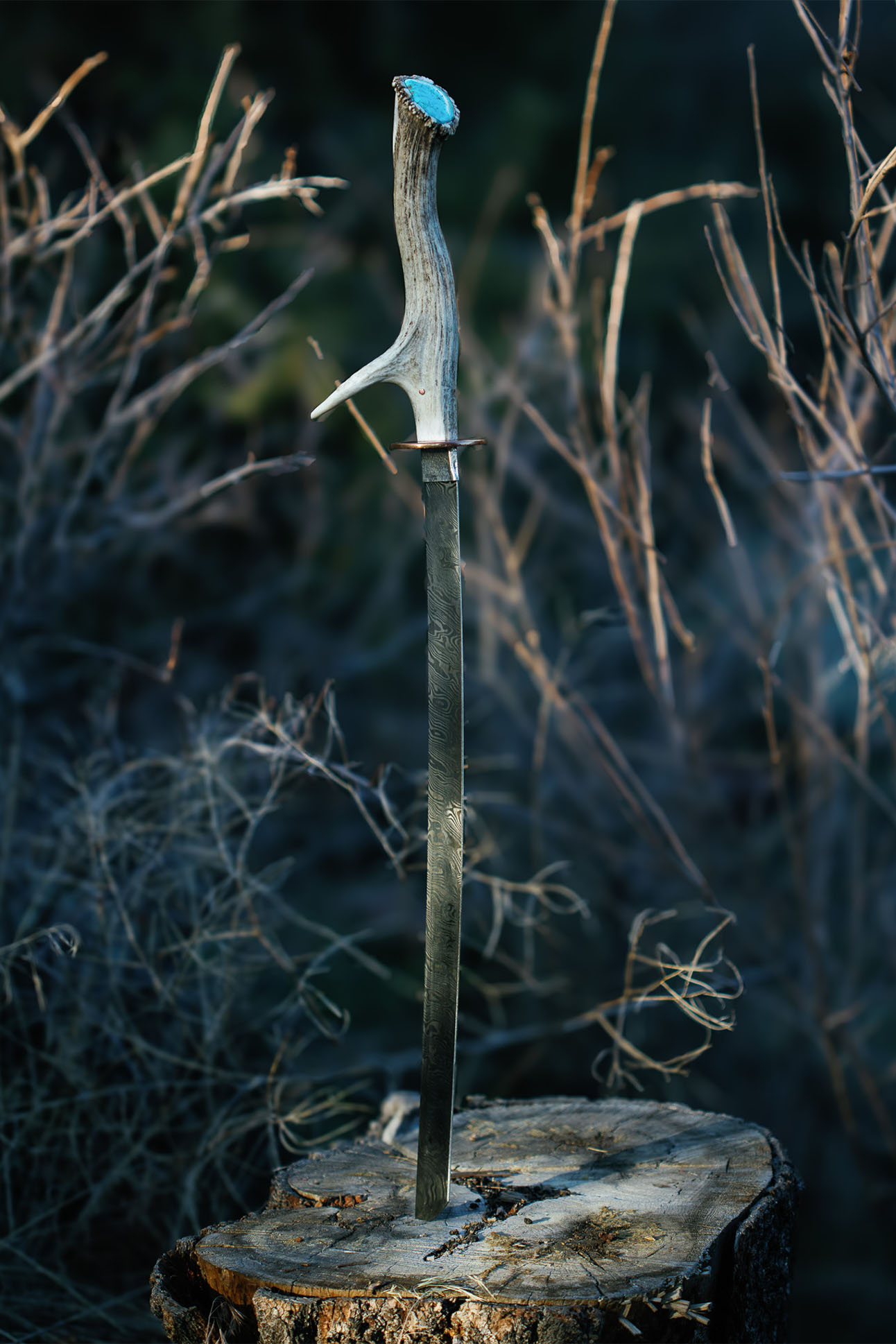
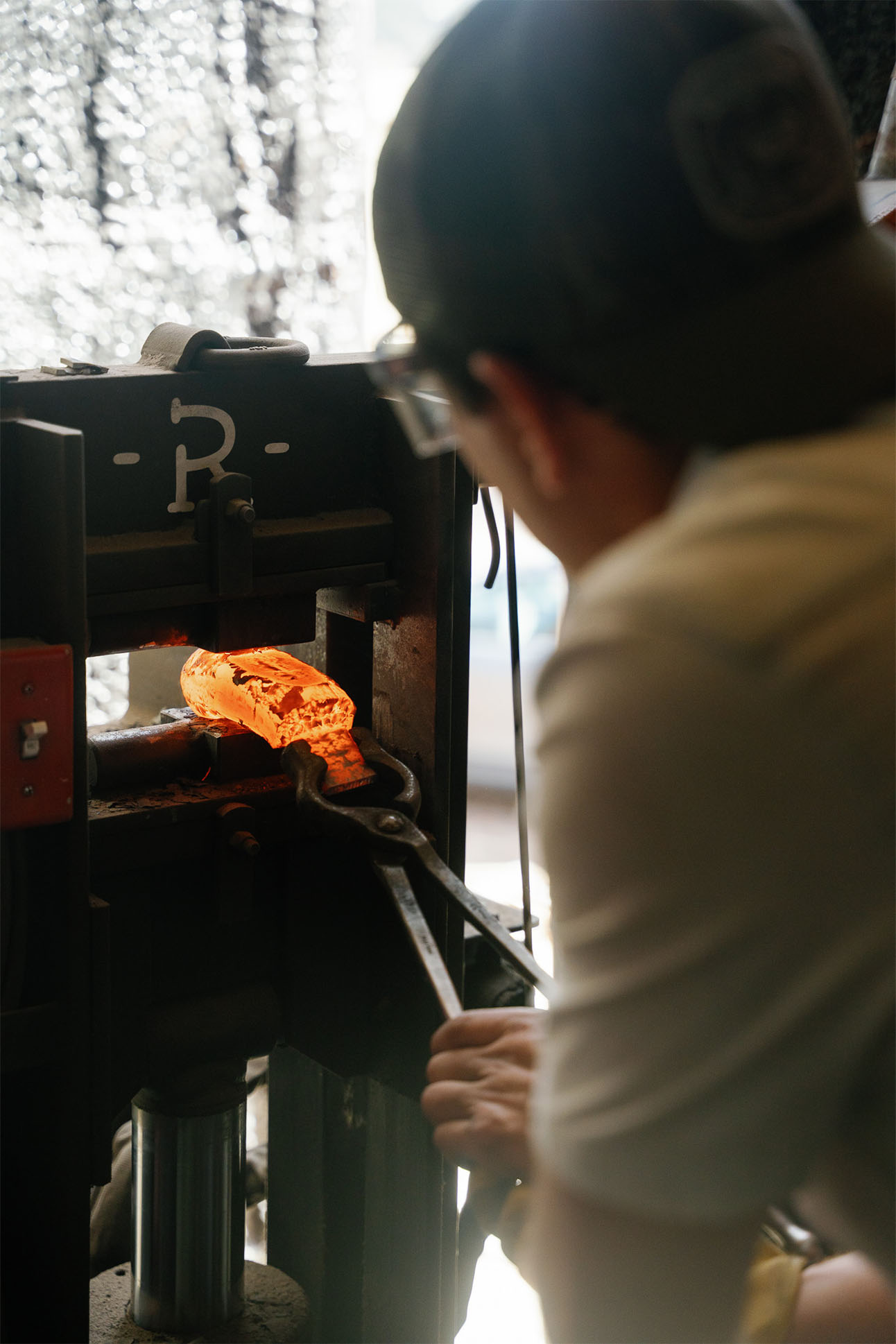
Since 2021, Rancher Blades has gained a cult following—and not only among cowboy types. Kepler showcases his knives twice a year at each of the six Kemo Sabe locations throughout the U.S., including the Western wear brand’s flagship store in Aspen. “One of my favorite things to do when I have shows is to bring a grip-strength test to show people how physical my job is,” he says. “Everson Griffen, a former player for the Minnesota Vikings, was at a show and he tried to beat me three or four times and I kept beating him by two to three pounds. Swinging a three-pound hammer over and over all day builds serious grip strength.”
For his latest project, Kepler has sought out another special piece with a unique provenance, this time obtaining a section of cable from Aspen’s original Lift 1A, the fixed-grip double chairlift that was installed on Aspen Mountain’s west side in 1972 and is currently being replaced. Plans to forge it into a Damascus blade and pair it with a handle crafted from marble sourced from a quarry in Marble, Colorado, are in the works. “That will be a knife with a rich, local story,” he says. “Far beyond mere utility, my knives are forged as an expression of craft, rooted in history, heritage, and place.” rancherblades.com