
By Scott Rothkopf
Scott Rothkopf: Do you remember how far back our relationship goes?
Rashid Johnson: I remember us meeting, maybe 13 years ago at Equinox Gym on 33rd Street.
SR: It must have been 2012 or so when I lived around there. The only relationship I’ve ever developed in a gym.
RJ: You know, that’s odd.
SR: Maybe I should work out more. I remember that was around the time that a piece of yours was coming up at auction that I really wanted for the Whitney collection, and you paired me with artist David Schumann and we were able to acquire the piece.
RJ: Yeah, I’m really glad that we were able to do that … so yes that’s when I remember us building more of a personal relationship. But before that, we were, of course, occupying a lot of the same spaces.
SR: Do you have any particular memories, either as a visitor, from your youth, or as an exhibiting artist, about the Whitney Museum of American Art?
RJ: There are a number of shows that I’ve seen at the Whitney that made pretty significant impressions on me. I think the first one that comes to mind is Thelma Golden’s curated exhibition of the work of Bob Thompson. I saw it quite early in my career. I was in college at the time and still living in Chicago. I’d come for the Whitney Biennial, really kind of hoping to one day be able to participate. I never was given that opportunity. But I was always hoping.
SR: It’s not too late, maybe one day.
RJ: Maybe one day. I would totally do a Whitney Biennial. I just think it’s such an exciting show, and it continues to be a special show for young artists, you know? It’s such a point of graduation for a lot of young artists, from the position of amateur to feeling very much like you’re a professional artist.

SR: I love that idea because, for many of the artists, it’s the first time for them to work with a top-notch institutional team, whether that’s our education department working on labels or the art handlers who are so phenomenal. And it’s also the first time to show their work in front of a really large audience. I don’t know that artists, especially younger artists, often think about that.
RJ: It’s a fascinating opportunity. I think the Whitney has historically done that with so much success, the Biennial being only part of that history.
SR: At the Whitney, you have exhibited in multiple contexts. One of the most significant was having your sculpture Black Steel in the Hour of Chaos (2008) on the terrace of the museum, and the idea of those “crosshairs” taking in the whole city, and also possibly focused back on the Whitney, because you could see it from the street.
RJ: I loved having that work out on the terrace. I think it was one of the best installations of that particular piece that I’d seen, because it really allowed you to take on the city and put it in this kind of urban exchange, right, high up, allowing it to focus out on the urban condition—but to your point, having that duality, that sense of, “What is this being pointed at?”
SR: What was it like for you being in our Alvin Ailey show last year? I think back on that show as not just one of the greatest shows ever at this museum, but that I’ve ever seen, and I loved how your work existed within the ideas of Ailey’s life, his art, and also an entire oceanic creative universe.
RJ: That show was incredible. For me, as an artist, the thing I found most rewarding, outside of the fact that it was just kind of wildly successful and brought so many different eyes to my work and the other artists involved, was to see my work employed to illustrate a brilliant man’s life and career. The work that I included was from my body of work Anxious Men, and it was meant to mirror some of the anxieties that Alvin Ailey had written and talked about as part of his journey.
The curator, Adrienne Edwards, used my work as an illustration or activation to recognize something that was happening with Ailey. The idea that the work can have a job, that it can do service, is something I’m super invested in.
SR: That’s so interesting, because I can imagine other artists saying, “I don’t want my work instrumentalized in someone else’s storytelling.”


RJ: I could see that. I’m excited about the flexibility of that. I recognize its ability to be successful as an autonomous object and to be a great tool in illustrating my own concerns. I don’t want to have so much ownership of my practice that it’s not allowed to live a life outside of my own agendas and concerns.
SR: This notion of usefulness, or utility, really intrigues me in relation to New Poetry, a major, site-specific installation that you made for our restaurant and outdoor plaza. It does almost architectural work and also greets all of our visitors as a kind of portal that frames their consciousness of the American art they’re going to see.
RJ: I was really proud to be commissioned for that work. I was really interested in the opportunity of working between the interior and exterior. I love that point that you just made around it being a threshold, or a point of entrance, or a kind of a gate, in a way. And then, you know, belief being suspended, or disbelief being suspended after you cross it, right? It’s the “Alice in Wonderland” of it all, coming into a museum, and a museum being this space of radical exchange.
SR: Totally, it has that quality.
RJ: I love that that work could function as an entrance point, and as an introduction to the institution … and themes that you’ll confront when you get into the institution around the prescient concerns of the vulnerable, or the human, or the responsible. It’s exciting that I get to be someone who starts that exchange for the visitors.
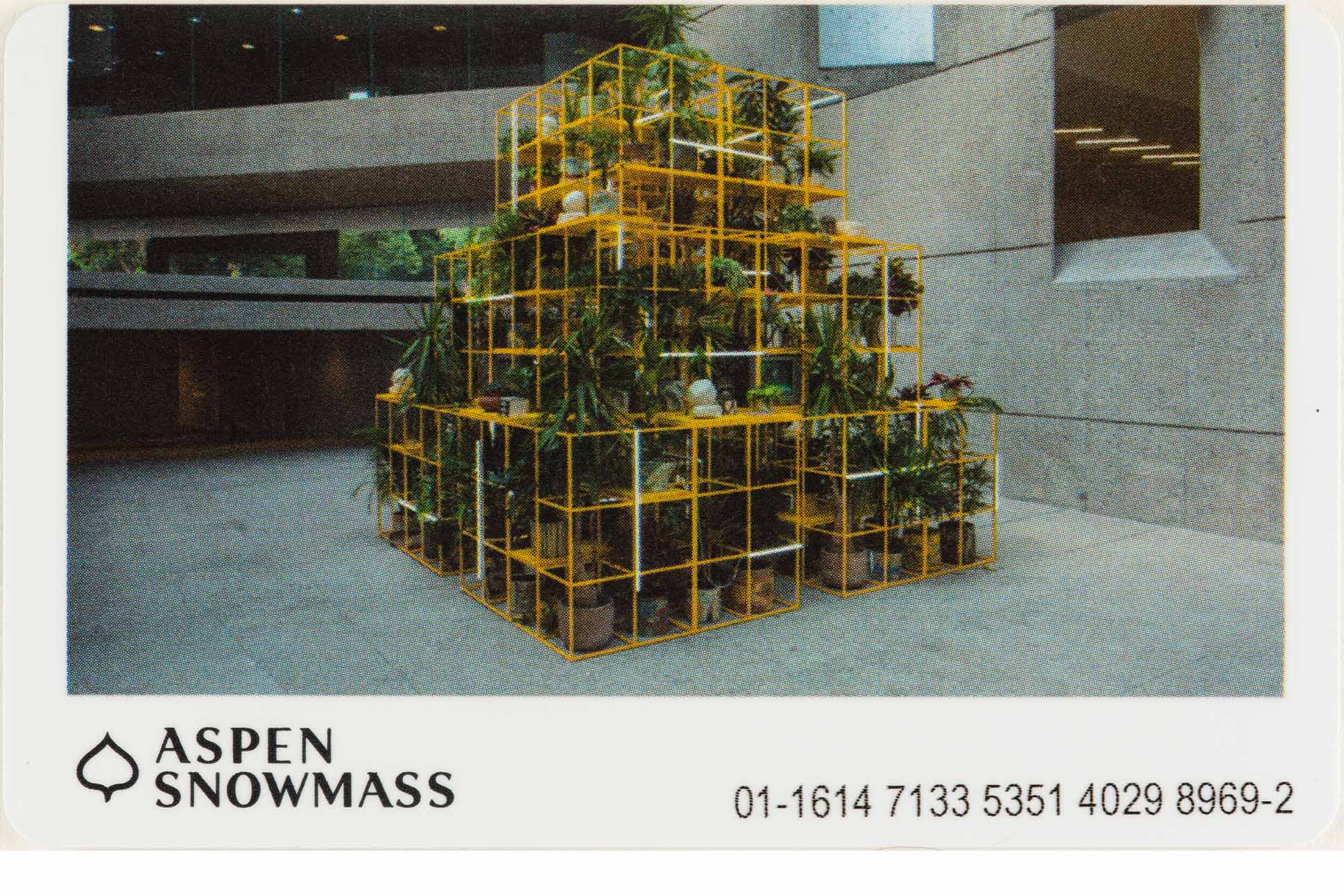
SR: Let’s discuss Aspen and your deep involvement with nature. Obviously, you make sculptures like this one that have living plants in them. You reference nature in so much of your work, even outdoor videos. So let’s talk about your interest in the natural world as it relates to art, or your art and climate and ecology.
RJ: I really do have a fondness for the idea of how nature can be an effective partner in the work of an artist. And for me, it kind of starts with this personal recognition of where I grew up. I grew up in Chicago. I was an urban kid. So much work that I’d come across when I was younger—American art from after the war—felt like it was invested in the urban condition. And I continue to be excited about urban space. I mean, if we look at postwar art and its relationship to American abstraction and some of the great artists that forward those kinds of pioneering positions, they’re all urban practitioners, all thinking about interior, urban space. I talk often about Henry David Thoreau, and Walden Pond, and the idea of walking, and the opportunity to take a different ownership, I guess, of nature, and its wildness, and its ambivalence, and its inherent transgression. I’m just always excited about that opportunity, because I also think it’s something that we all have some sense of access to and relationship to.


SR: And a sense of concern, perhaps, too. I mean, from an environmental perspective.
RJ: My relationship to nature and the plants and the living things revolves around how we can consider personal responsibility, or our collective responsibility, in relation to keeping things alive. Growing up, my mother had plants all over the house. She had this deep investment and love for these things. She would take this nature and bring it inside and nurture it, and these things became vulnerable. Plants are fascinating because they mostly become vulnerable when you take them out of their natural condition.
SR: I was there when you were honored at the Aspen Art Museum gala in 2018. Has the environment of Aspen been in any way influential in your thinking, either in your work or in the context of how your work functions, maybe, or how it’s perceived?
RJ: Oh, I love Aspen. I think it’s unimpeachably beautiful. I have had so many great experiences there, including an exhibition at the museum, and shooting The Hikers. The film is about two men meeting on the mountain, recognizing each other, mirroring each other’s movements, and then kind of falling in what I consider to be a platonic love, having confronted each other on the mountain. That was a film, but it was also something that I went on to do as a live performance ballet in both Aspen and New York at the Guggenheim.
The plot was influenced by the time I’d spent in Aspen, taking hikes, thinking about nature, thinking about space and beautiful places, thinking about autonomy, but also thinking a lot about my body in these kinds of spaces, and thinking about freedom and being loose, in a way. How does one walk through space and have ownership of place? And walking in those spaces is free. The mountains are available to you—you can activate them and use them and be rewarded by them, so that helped inform my project a lot.
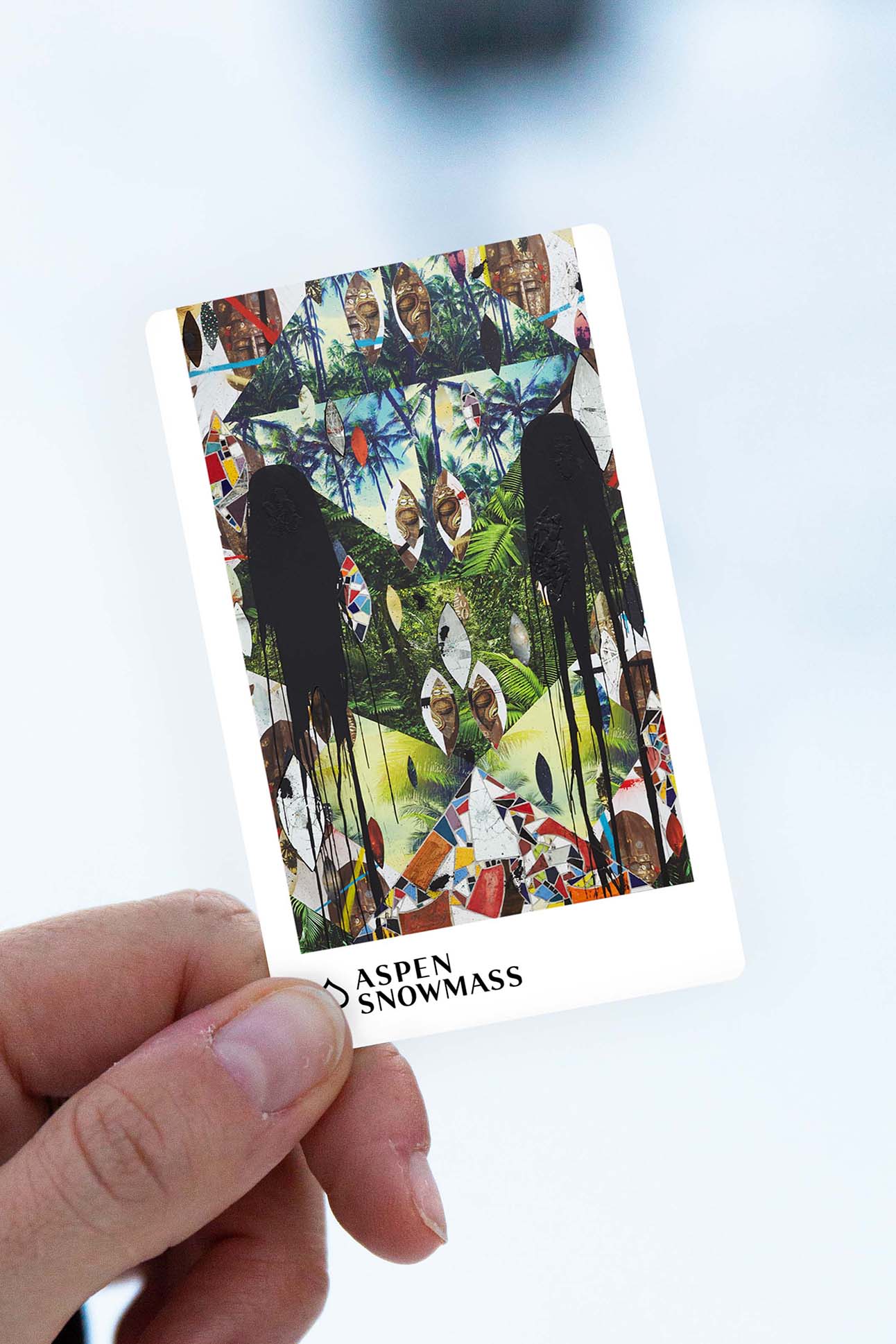
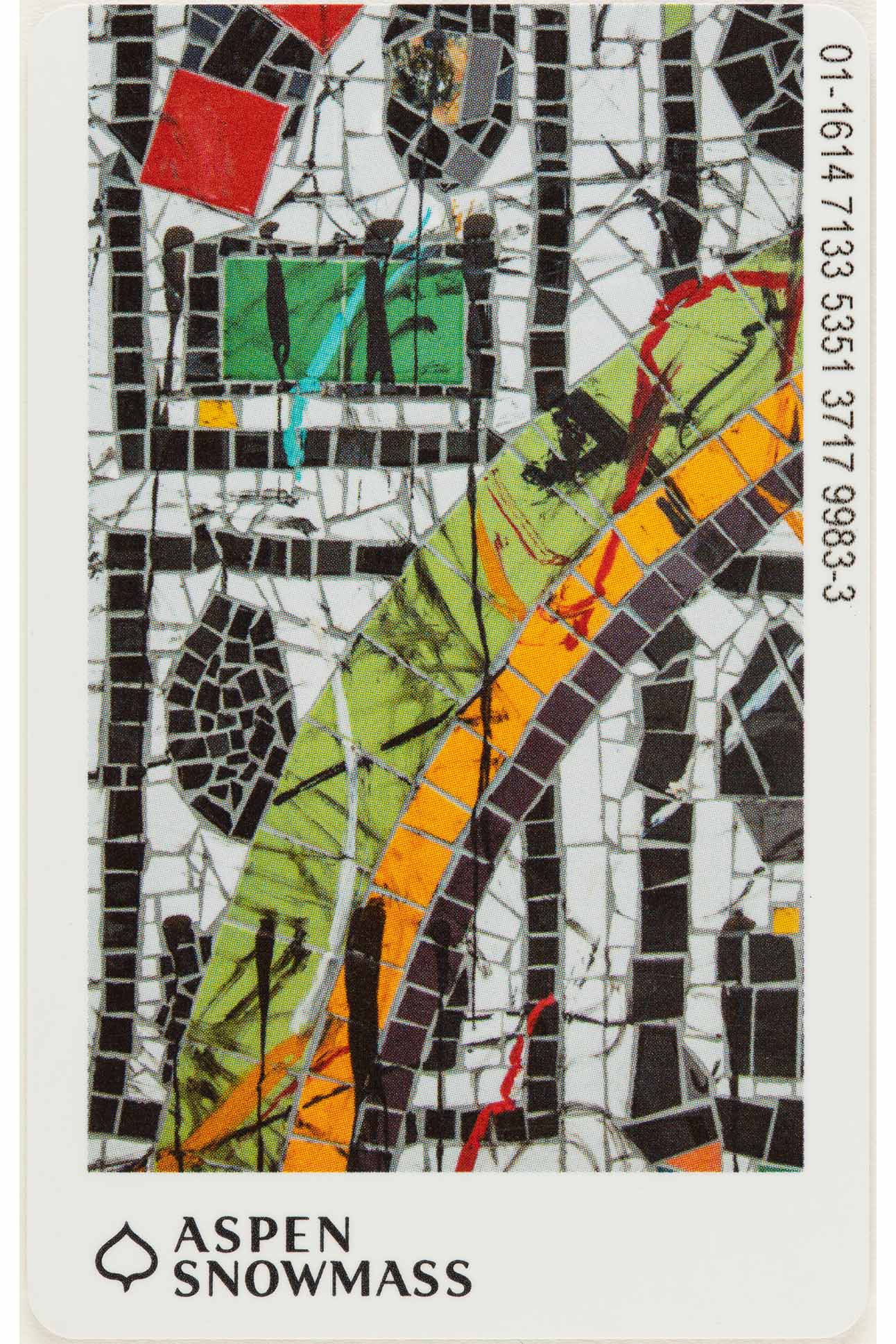
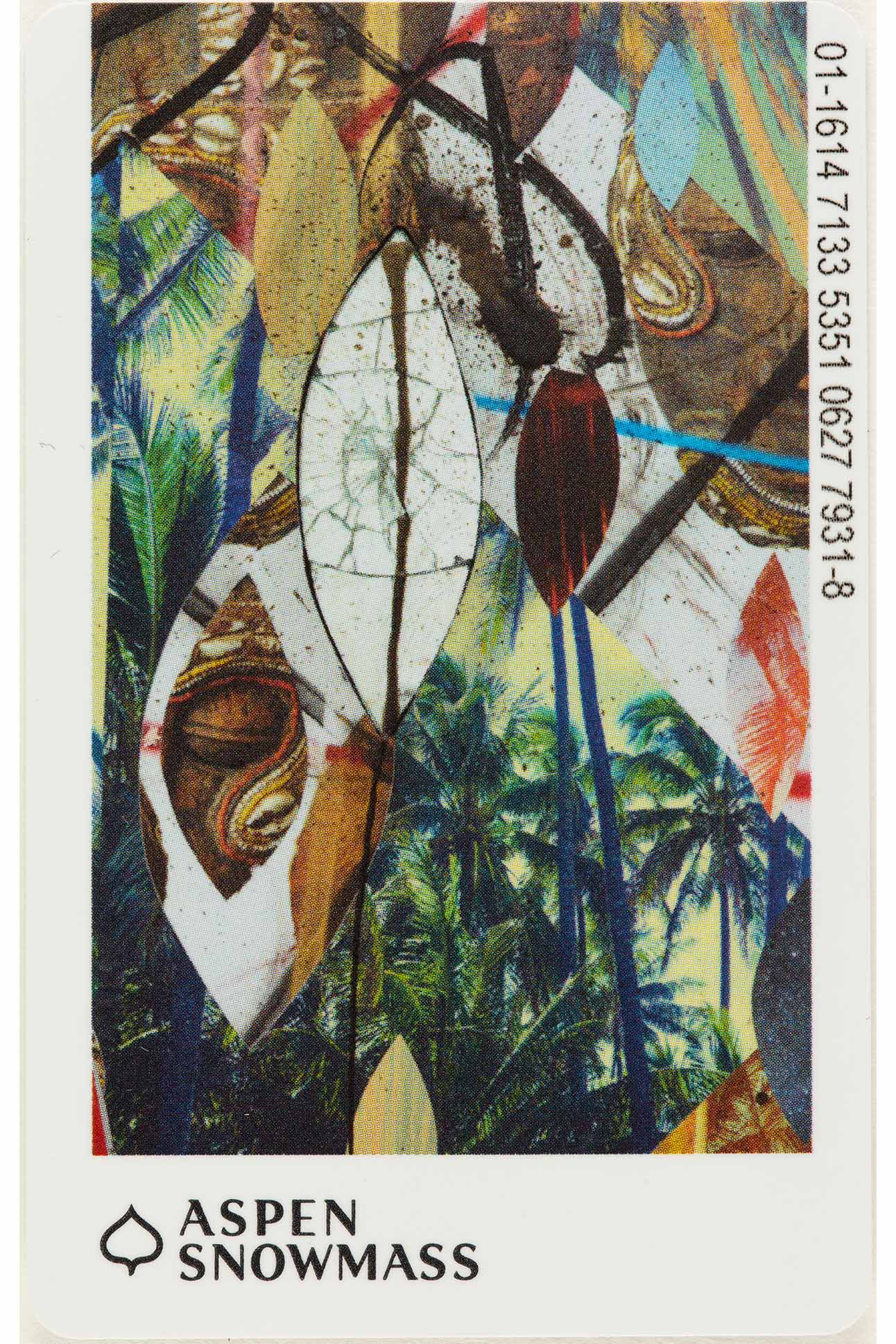
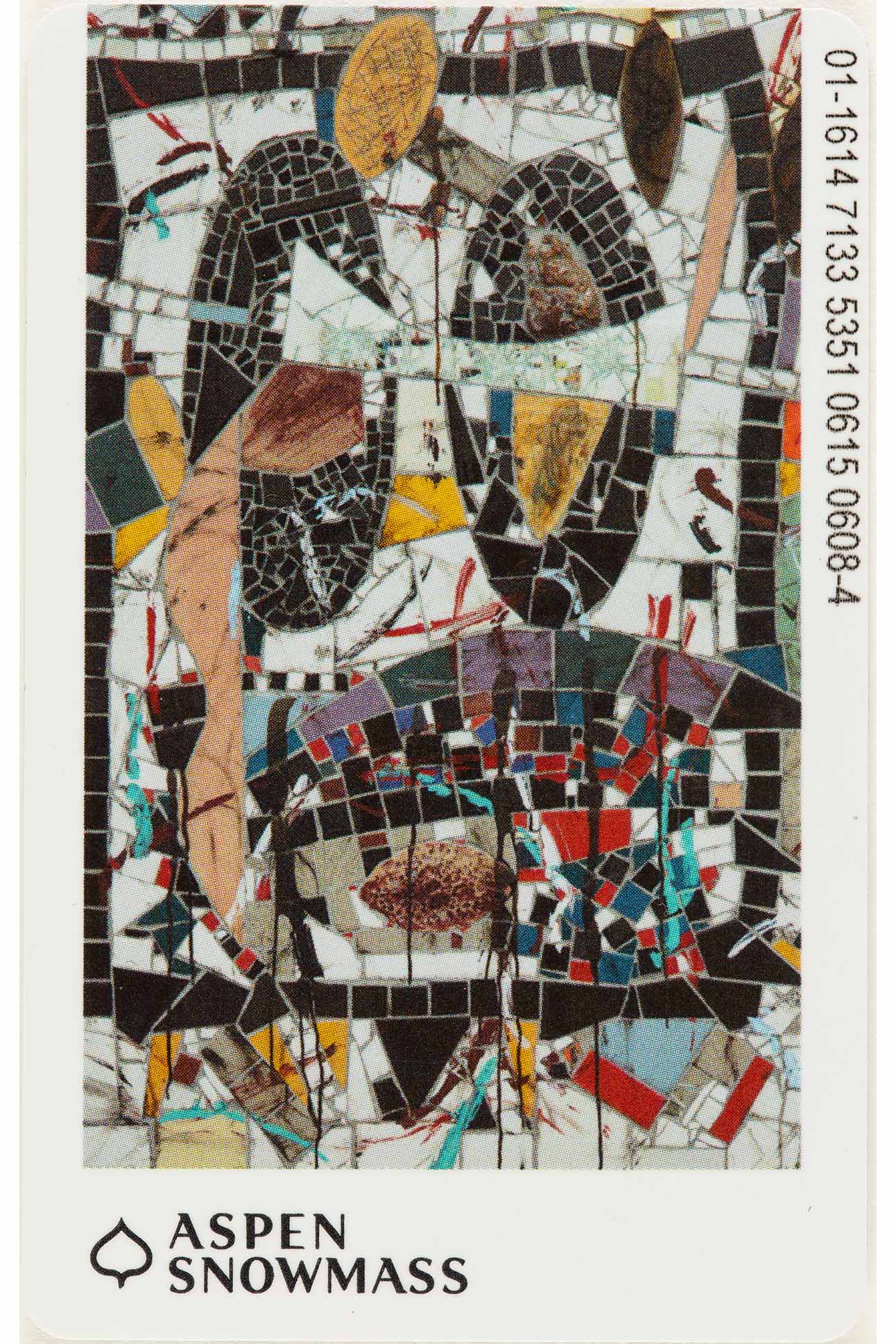
Aspen has really followed me as a place, and things that I learned there and the exposure to nature that I had there continue to inform my work around nature, movement, walking, agency, availability, freedom, and space. So, I’m a big Aspen fan. I try to get there at least once a year. Creating the ski pass was just so much fun. Like the Whitney Biennial, it broadens the audience and they feel like they’re part of the cultural resonance that’s born of that artist’s practice. I think everyone is served by that. People still come to me and say, “Oh my god, I saw your work for the first time on my ski pass. It was my first time skiing. My children became aware of it.” Having these kinds of spaces to create these dualities—and recognizing sport, art, leisure, and nature are connected—is a special opportunity.